I wonder if there are any readers out there they may have experience using these web applications for doing work or even for recreational computing purposes? You see some people just want to have fun and kill time on their computers.
Jing – screenshot, or short movie maker – mini version of camtasia mostly used for desktop recording. You record yourself performing some action on the computer and Jing will capture video frames of where you go, what you select and what you type in to accomplish those steps within the application. Then it dumps that out to a movie file you can link to on the Internet, for all to see.
Picnik – online photo editing through a web page. It can link up to a photosharing account you may already have like Flickr. There are lots of special effects filters and tools for cropping and adjusting the color balance and exposure of your pictures. You can add text or change captions for the pictures you have on a photosharing website.
Dvolver – animation maker, but not just any animation. This is the kind of junk you see at Hallmark dot com for making greeting cards or birthday cards to send to people in email. I’m not terribly impressed, but I’m sure it will absolutely knock the socks of my co-workers.
Gabbly – chat tool to use on web sites, or better yet, Simply type gabbly.com/ in front of a webpages URL, you will be able to chat with anyone visiting the page at the same time! For example, to chat on CNN.com, just visit ‘gabbly.com/cnn.com‘ in your browser. Youll see the CNN website with the Gabbly Chat window floating on top.
The days I spent watching educational programs on PBS I think gave me an interesting way of seeing the world. And I am not alone:
Exposure to Samuel Beckett, art-appreciation documentaries, “Masterpiece Theatre,” and grade Z film gave me the rudiments of an aesthetic education. And a good thing, too, because nobody in the local school system would have used the expression “aesthetic education,” or considered it worth offering.
Those were golden halcyon days watching the weird shows fly by. I remember seeing Firing Line briefly and Steve Allen’s program and Dick Cavett’s program. I’m not saying I ‘watched’ them, but I would see them in passing hoping to find a repeat of Sesame Street. My parents would watch Masterpiece Theatre religiously, which I hated because I wanted to watch what else was on Sunday nights. Usually it was NBC’s Police Story or some other violent, low-brow entertainment.
Now all that old TV “content” can be recycled to the public airwaves of the Interwebs. All that was old is new again. Which means I should try tracking down all those old episodes of Omnibus that made the transition from BBC to PBS. Sometimes I think PBS and BBC should have formed up a single International Media conglomerate and shared more costs in preparation for the large scale media consolidation of the ’80s. And certainly they could have hedged their enterprises somewhat against the proliferation of Satellite and Cable TV networks.
Oh, if I could just get the BBC for several hours in the evening or even during the day. I would watch Emmerdale or Eastenders, I would even watch Tesco commercials. Doesn’t matter to me. Too much of what we watch locally on TV is a kind of bubble like prison, meant to reinforce, nay indoctrinate one in the predominant culture. And more choices hasn’t helped as the media owners don’t let the media flow freely cross international borders.
I was raised on the most successful initiatives from Public Television, or ETV as it was previously known (E standing for Educational of course). Sesame Street, 3-2-1 Contact, Mister Rogers’ Neighborhood, and Reading Rainbow were my bread and butter as a kid. And yet while those educational programs were major successes, television’s promise of bringing education and instruction to a wide audience was left largely unfulfilled in the United States. Proponents of educational TV faced the harsh realities of the large amounts of funding required to create and maintain television programing placed upon them. The need to satisfy the large …
(Read more at source)
As a kid I watched PBS a lot. One reason being in the 1970s funding for PBS kids shows and educational programs was better than it is now. As kids we would watch hours of programming and then we would be rewarded, REWARDED with a fund-raising drive once a year. The reason I say rewarded is PBS went out of its way to entertain and bring in new viewers. They would air special programs especially for the fund-raising drive. I remember one year they aired Woodstock as the centerpiece of one year’s fund-raising campaign. That was the cool part, you never knew what they would pull out to reward us when they were asking for money. And what did we get in return?
WGBH, the Boston superstation for PBS and WNET 13 in New York would crank out the jams. Some of it was experimental, some of it was just downright good. There was Sesame Street, Mr. Roger’s Neighborhood, Electric Company, Zoom and eventually 3-2-1 Contact. And even in school our teacher’s would fire up the TV in the days before the VCR to show us certain science programs different times of the week. Sometimes it would be a reading program, or a science program. At one point during the Carter Administration, all the kids were encouraged to learn the Metric System. So for about one year we watched a program once a week to teach us the metric system. Turns out we didn’t go metric.
After school was good too. We had a TV show produced by a “local” TV station in Sioux Falls, SD. It was hosted by the weatherman on KELO-TV. It was called Captain 11. I knew kids who had gone down to Sioux Falls and gotten on the TV show. And there was also a drawing for a prize on each episode. It was a giant plastic tootsie roll with tootsie roll lollipop candies inside. I never saw any of my friends on that show. But it wasn’t for lack of trying. I saw every Hanna-Barbera cartoon, and a few Our Gang short films along the way. Why I spent more time watching TV than I can even add up. It’s a lot that’s for sure.
I’m beginning to think the iPod touch is not an end-of-life product that should be ignored. Oh, I did at one time due to the torrid pace at which Apple was releasing new iPhone products. Seemed like the old iPod was absolutlely superfluous. As the iPhone models increased their storage and speed, the iPod touch tagged along, but not too closely. Currently the iPod touch is consider a second generation device (2G) versus the iPhone in its 3G and now 3GS forms.
Like most of you who may not own an I phone, I have felt the pressure of seeing all my friends of Facebook buying iPhones and cross-posting from Twitter to Facebook via their iPhone. So caving into peer pressure, I’m considering buying an iPhone maybe in October when I reach the 3 year mark as a customer with AT&T. I have some things working in my favor though. I lucked out with being a Cingular customer before they combined with AT&T and before the exclusive distribution deal for the iPhone. But do I really need to buy an iPhone to get all the benefits of the App Store? Do I need to pay for the big hefty data plan?
Maybe not. Just this past week Mark Sigal @ O’Reillycom followed up all the rumors and speculation about Apple entering the netbook market with a Tablet PC. He claimed then Apple was already making a netbook and it was called the iPod touch:
But, perhaps the real story with respect to the forthcoming Apple Tablet Device is that Apple has already released a tablet computing device.
It’s called the iPod touch, and because it’s often overshadowed by its noisier sibling, the iPhone, we sometimes forget that it has already sold 15M+ units.
Today J.P. Morgan is also saying, Apple is already in the netbook market. They have a device called the iPod touch.
The J.P. Morgan report views the iPod touch as Apple’s netbook, of sorts. At least, the analysis says, until Apple officially enters the netbook market – something the firm expects the Mac maker to do.
Given the confidence level of reading these two articles I am more willing to consider an iPod touch. It seems like a more frugal choice without the burden of un-ending data plan fees. True the cost is not susidzied by AT&T, but that one time shot of money is about what I was willing to spend on a netbook anyways. So maybe an iPod touch is the better option if you want to save a little cash by not purchasing a huge data plan from AT&T.
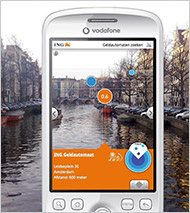
I can think of a hundred different pre-cursors to the golden Nirvana of Augmented Reality. Howard Rheingold set the bar pretty high in his catalog of the state of the art called “Virtual Reality”. Everyone from the pre-history of VR to the then present day had their say of what the future should look like. Enter now, the future as it is. Cell Phones! That’s what we got, so that’s what we’re going to use right? Sure enough if you know your own coordinates using the GPS chip in a cell phone and you know the orientation of the camera in that cell phone, you can overlay data one what ‘should be’ in the field of view in that camera viewfinder, right? Well sometimes good is not the enemy of perfect and a company in Amsterdam has created a smartphone app that combines these required features to present a ‘good’ version of augmented reality. As this article in the NYTimes below states it’s called Layar.
Previously in the field of Virtual Reality everyone attempted to provide near perfect reality. Using magnetic trackers from Polhemus to be calibrated up to some kind of goggles or head mounted visual display. At MIT’s Media Lab the project called “Put That There” was originally for commanders in the Navy trying to assess and react to battle conditions on the seas.
The next revision came in the early 1990s at Boeing where they tried using headmounted computer displays. The display with fit over one eye leaving the other eye open to focus on work being done within the fuselage of an airliner being built. The worker could see displayed in realtime information about what they were touching and moving wires and cabling through. Access to information like that without having to stop, look at blueprints, read computer documentation or find spec books would save inordinate amounts of time and prevent mistakes in the routing of wires and cables. Fast forward to today and now you have the ubiquitious cell phone, with camera and GPS chip and a little bit of mathematics and algorithms. A programmer can determine the field of view from the GPS coordinates, get the cell phone’s orientation, map out what should be in the field of view and overlay that information on the LCD viewfinder as you point the cell phone in all directions. It may not be smooth or realtime, but it may be ‘good enough’.
Personally I think GPS should also be paired with a laser range finder so that the field of view can be further refined. That way when you point the camera at a building or a river, you can ascertain the GPS coordinates of the thing at which you are pointing. Once the solution is calculated you look it up in your points of interest database, voila, that’s so and so church, that’s so and so river. That quickly. Some have decried this tendency in usage of navigation devices. Once you fully empower the autonomy and self-sufficiency of a stranger in strange land, you rob him of the benefit of ‘local knowledge’. In that sense Augmented Reality will make us all dumber the more technology enables us to find out own way or learn landmarks without interacting with people. I say to those people I respond with this flip remark: “Bring it on!” If it means being stupid, losing local knowledge, alienating myself from my surrounds then by all means I would rather have that autonomy and self sufficiency wherever I travel. That’s the kind of guy I am.
Augmented reality courtesy a smartphone
Augmented reality will “reinvent” many industries, including health care and training, Mr. Inbar predicted. Already, researchers at the Technical University of Munich are looking at ways to display X-ray and ultrasound readings directly on a patient’s body. A research project at BMW is exploring how an augmented-reality view under the hood might help auto mechanics with diagnostic and repair work.
Considering the evolution of email and the Internet it’s a wonder we cling to it so tenaciously. The original Internet was slow, unreliable, and had a small number of actual users. Email was a messaging mechanism allowed communication to occur asynchronously over a slow unreliable network. And the mechanims used to transport it prior to the ever popular SMTP server was something called Unix to Unix Copy Protocol. Your messages to people would get copied over the network as files to another Unix computer. Eventually they would get routed to the mail spool on a machine your recipient had an account on. He could then read the message and reply to it. Kind of like telegrams back and forth. So what if you got a telegram with no subject line? Or a telegram with all kinds of tasks for different projects all wrapped up into a single message?
Dan Dube @ dandube.com complains that Filing Cabinets which approximates the desktop computing metaphor are not good. The extra work required to make the Filing Cabinet work outweighs the benefit of the activity the email is helping take place.
Each email is a file, so each email needs an informative, relevant title. Look in your inbox — I would guess there are almost no emails that fit that bill.
Nobody uses subject lines. I get blank subject lines from people. Or they put the vaguest subjects in the subject line.
Emails don’t happen in a vacuum, people reply to them, are added and subtracted from the distribution list, change the content, etc. Yet we still treat each email as a singular file.
That’s the truth, especially for group projects, or worse committee projects where people come and go. You don’t know sometimes where a requirement or task ever came from because you don’t have the original text in an email from the person that proposed it. There’s no trail or flight data recorder for what transpired in that email message.
Emails don’t always categorize nicely. If they fit in more than one “folder”, the filing cabinet metaphor will fail.
I couldn’t agree more. If you have a boss who starts using ‘bullet points’ in the email you know you will need to file that thing in more than one spot. I have a boss that does this often and it takes a few minutes to parse out the tasks that are expected to be accomplished. Once that’s done, which “project” do you file that email message into?
Emails are extraordinarily redundant, with the original message copied hundreds of times in long conversations.
Oh the insanity of quote all. And worse yet I think Outlook turns it on by default. Occasionally I will go back through that really long message and delete everything except my own contributions so the email is physically shorter in length and easier to read.
Files can be emailed, which immediately forks the original file and makes any further edits a synching problem.
This happens all the time rather than copy and paste the text of another file into the medium of the email message, the immediacy of ‘attaching’ just makes it too appealing. Someone is ‘dumping’ the task off on you with the minimum effort necessary, and that means they attach the file that has the exact same text they could have included in the email. Worse yet, sometimes those attachments are PDFs! Useless,useless,useless. Try keeping track of that mix of files.
All of these gripes apply to the file system of the computer, too. Regular files (mp3, doc, html, etc) all have the same shortcomings.
Again it’s hard to associate files in a wide range of ways that make sense for a variety of projects. None of us are limited to one file type in all the projects we do. We might have pictures, audio, video, text, etc.
Now Dan mentions Google Waves. And I wrote a quick blurb about Google Waves about week after the Google demo in San Francisco. Waves is by design, very different from email. It’s not copying files from one server to another over an unreliable slow network. It is meant to give you realtime text based communication in whatever collaborative style you prefer. And it keeps a record of everything, so you can step back through a document at each version or stage of editing.
It’s kind of like chat too. You just start a connection with one other person, start inviting in participants as you go. And as part of the record of the ‘Wave’ or wavelength, you have buddy icons of all the participants. And everything is a reference to that original wave. So file it wherever you want, open it from wherever you want, it all points back to the original and will edit that original file for you AND all the participants. Because like I said, there is but one original, one index everyone’s client points to that same EXACT REFERENCE. That’s the genius of the wave format of communication and collaboration. Waves is a giant shared workspace, nobody really keeps private copies and edits them. They always edit the shared copy no matter what. And so the mailbox/cabinet metaphor is broken at last.
So if it’s not a filing cabinet we’re looking for, but Google Waves, what’s the metaphor? Instead of a filing cabinet in my office, I now use a big giant bulletin board that sits in the hallway in my building. And everyone posts there and edits there and nobody keeps copies of anything anywhere on the bulletin board. The original bulletin is there with all it’s edits recorded, all the participants in the document are recorded for all to see. Scary isn’t it?
I personally enjoyed very much the iPhone 3GS presentation when TomTom Inc. presented their software/hardware add-ons that will allow you to use the iPhone as fully functional Navigation System. The question is how long companies like Garmin can sit monopolizing the market and provide little more than radical incrementalism in it’s new product offerings. About a year ago there were four competitors in the personal navigation market: Garmin, TomTom and Navigon with Magellan kind of in the background. Navigon has ended it’s production of devices but will sell it’s software to anyone willing to license it. Magellan is still creeping around, but has been superceeded by Garmin long ago. So TomTom and Garmin beat each others heads in on a quarterly basis. TomTom really did innovate in the software end of things providing all kinds of aids like telling you which road lane to take on the highway, or help at difficult intersections. As they rolled these out, Garmin would just sit back and eventually respond with a similar feature. Slowly by attrition trying to bleed away the advantage of TomTom. Worse yet, Garmin entered into a project to design a brand new cell phone with all the software and gps components integrated into it. THAT folks is the Garmin strategy. They will own the production of the device and the software or nothing at all. TomTom has taken a rather different approach and is kind of taking a cue from Navigon. They took the Apple iPhone Application development environment and ported the software into it. Now the GPS chip of the iPhone can be fully accessed and used to turn the iPhone into a TomTom Go!
Oh how I wish Garmin had seen this coming. Worse yet, they will not adapt their strategy. It’s full steam ahead on the cell phone and they are sticking to it. Ericsson is helping them design it, and it won’t be out for another year. Which shows the perilous position they are in. With the blistering pace of product introductions in the Navigation market, wouldn’t Garmin have learned that a 2 year design cycle on a cell phone is going to KILL the product once it’s released? And worse yet, as the tastes change, who is going to give up their iPhone just to have the privilege of owning the Garmin branded cell phone. I swear that product is dead on arrival and Garmin needs to pay off it’s contract with Ericsson and bury all the prototypes built so far. End it, end it now.
“It’s more like a desperate move. Now that you have the iPhone and the Pre, it’s just too late,” Mr. Blin said. Smartphones equipped with GPS “are the model moving forward that is going to be successful.”
The answer to the question in this picture to the left is a resounding NO! All bets are being placed on Apple using a custom processor for it’s version of a Tablet PC. This is interesting in that everyone in the Technology Computer Gizmo/Gadget news circles has pursued this as a story starting last week.
China Times Daily apparently is hinting a new Mac Tablet is being manufactured for release in October of this year. I’m surprised they decided to go with a custom processor for the tablet. But given the ultra-competitiveness of the Wintel netbook market, CPUs are the next big thing in product differentiation. There are manufacturers now using Google’s Android cell phone OS paired with cell phone processors from ARM and Motorola for a new generation of battery conserving netbooks. Most of those products are targeted at the Pacific Rim market and will never see the American market at all. Which made me sad because I would love to have a netbook with extra long battery run times.
I have adapted much of my computer needs to what can be delivered through a network, web-browser and web apps. So the netbook to me is a nice analog to a cell phone and I’ve been waiting to jump into the market until some bigger innovations occured. Maybe this product will help shift the market the way the iPhone has done for cell phones. And with their new found CPU designs maybe product differentiation will even be easier.
However, hairy eyeball of experience rears it’s ugly head and takes the shine of this buzzing hive of technology press bees. Enter Mark Sigal @ O’Reilly.com. Mark doesn’t think the tablet is the real story, but that the iPod Touch IS the Mac Tablet right here, right now. Given Mark Sigal’s earlier survey of the mobile computing landscape he proposes a unified matrix of Apple computing products rather than phone vs. computer. So the longer one waits, the less we have to worry about whether we should be buying a Tablet or an iPhone. Personally I think the bigger screen and the new CPU from PA-Semi does warrant some extra attention. I think we’re going to see either longer battery run times, or maybe mix of iApps and iLife and iWork on the same happy device. But, who knows? We all have to wait until October.
The VentureBeat note says that Apple divided the PA-Semi designers between two projects: ARM-based mobile phone processors on the one hand and a tablet processor, possibly ARM-based as well, on the other.
So we are looking at an Apple CPU-powered Mac tablet with touchscreen functionality and an October launch. The timing is said to be suitable for sales in the lead up to Christmas. Neither the manufacturers nor Apple are saying anything.
Everyone has been weighing in on the Google announcement of Chrome. Why last night even the News Hour on PBS did a short sales job on Google. They called it “Cloud Computing could Transform Data storage, Internet use”. The idea was selling software as an online service with all your data housed on the servers of a remote data center might change the software publishing business. The timing of this story on the heels of Chrome OS was a little too convenient. I wouldn’t have minded so much by Google CEO Eric Schmidt makes two appearances in the piece to argue on behalf of Google’s view of the Future of Computing. In some ways the whole piece comes of as a sales promotion for Cloud Computing.
Meanwhile on the Interwebs, I have entered into at least one discussion with an avid Google user who is swallowing the Google propaganda. I pointed out how poorly the first generation netbooks sold once unsuspecting or naively hopeful buyers tried to use them with the default Linux derived OSes installed on them. I’m not saying the majority of the early adopters were unprepared to adapt to a new operating system. But in fact after trying to adapt, they gave up and returned the computers. A mad scrambe occured to get a version of Windows on the next revs of the netbooks and voila! Microsoft entered a new market for the so-called ‘netbooks’ completely without trying. That is the end user/market inertia equivalent of falling into riches. Microsoft never saw this market, instead concentrated on the desktops and smart phones. Out of nowhere Asus and Acer along with all the other Taiwan manufacturers created a new product, trying to make it cheap they chose a Linux derived operating system. But the customer is always right. The customer learned how to use a computer on a Windows OS of some sort, old habits die hard.
So will Chrome OS beat the odds and succeed where Acer and Asus failed? Will they drive the next wave of innovation and make an OS that a Windows user won’t find unusable? I doubt it for a number of reasons. First off let’s address what you get with Windows in the ‘multimedia’ category. You buy a Windows OS, you get a whole layer of stuff in there called DirectX. It helps you play games, play audio, watch video all that stuff. You move from Windows to a Linux derived OS you get a loose aggregation of individual progams some of which play certain file types. Some require special program language libraries to be installed to work properly. There’s many dependencies, vast differences in the User Interfaces, and darned little of it is integrated into a seamless whole. If Google can bridge that gap, maybe the transition won’t be so onerous for the new Google Chrome OS users.
“Chrome is basically a modern operating system,” Mr. Andreessen said.
The first wave of netbooks relied on various versions of the open-source Linux operating system, and major PC makers like Hewlett-Packard and Dell have backed the Linux software. Intel, the world’s largest chip maker, has worked on developing a Linux-based operating system called Moblin as well. The company has aimed the software at netbooks and smartphones in a bid to spur demand for its Atom mobile device chip.
I’m enjoying reading about Walter Bender‘s project to make software that makes the One Laptop Per Child (OLPC) or XO-1 Laptop more useful to a wider range of people. What’s even more uplifting is the same software will run on older PC and Mac hardware. So don’t recycle that PC, just install Sugar Labs–Sugar on a Stick and continue using that PC until the hard drive finally fails or the display gives out. No need to endlessly upgrade your hardware, just keep on truckin’ with Sugar Labs. For schools with budget cuts and families with older computers Sugar on a Stick is going to be a godsend.
The Sugar on a Stick environment is self-contained and sized just small enough to fit on a 1GB USB Flash drive. You can boot into the Sugar environment, run all the applications, save our data on to the Flash drive. Then when you are done just reboot and remove the flash drive. The PC goes back to its original Operating System, no fuss no muss. Considering the amount of computer waste shipped overseas to be salvaged, keeping the computer running with Sugar might be a greener alternative.
Sugar on a Stick provides a coherent and consistent computing experience. It reduces costs by providing flexibility in hardware choices, allowing schools to keep their existing investment in hardware. Learners can benefit from the increased household ownership of computers; by bringing Sugar on a Stick home, every student has a consistent, comparable computing environment that parents can share in as well. It also provides off-line access to applications and content as not every learner has Internet access at home.
I am a fan of David Lynch. I saw the movie Blue Velvet once on MTV of all places. It wasn’t in its entirety but it did have all the adult content. It was more frightening than any horror movie I saw up until or after that time. Because its horror is so palpable. It is as real as me sitting here typing or getting up to go to the bathroom or driving to work. Its plainness and realness are what raises my level of paranoia 100 percent.
As a person David Lynch seems very mild, and he’s pretty happy generally and kind of nostalgic. He put up a website some years back to allow fans to contribute to his causes. Meditation is a big deal for him, and he’s trying to setup a large scale school for teaching tascendental meditation. So it’s always a shock or slightly unsettling to see him speak about something he hates. David Lynch hates Product Placement and knows that watching a movie on a telephone is much worse than seeing on a big movie screen. I haven’t really thought about David Lynch very recently. But a link to an NPR website reviewing new music from the Artis Moby caught my attention.
Moby
NPR.org, June 15, 2009 – Moby has just made his best record in 10 years — at least I think so. The new record by the DJ, singer, bassist, keyboardist, guitarist and all-around renaissance man, Wait for Me, is filled with beauty, sadness and celebration.
Moby had said in an interview he was inspired by an interview done by BAFTA for it’s David Lean Lecture Series. Moby felt Lynch was saying being creative was more important than the market for the work being created. Which led me to finding the original video and transcript of the interview:
“Everybody probably knows that success is just as dangerous as failure, maybe more. You second guess yourself from then on because you’re afraid to fall. Failure? Terrible at first but then, oh man, total freedom. There is nowhere to go but up, and it’s a very good thing.”
Moby asked David Lynch to make a video for one of the music tracks. Here’s the link to video on pitchfork:
So given this interesting combination of thoughts and ideas and inspiration all I can say is I’m so happy the web allows people to find those little seeds to start big fires burning. Lynch is right. Creativity is the thing. Or as Lynch likes to say the little fish that allow you to catch the really deep, abstract big fish. I too have received inspiration from finding the original album posted on NPR.org. I listened to the whole thing all the way through rather than a track at a time. Moby designed this to be an old style ‘album’ experience and he handcrafted it, a very personal work. I like it. I like it a lot. It’s fantastic. Run out and buy it, or download it or something. Do it. Do it now!








 Carpet Bomberz Inc.