I’ve followed Hackaday for a number of years via RSS, because they have been able to deliver the goods on a daily basis. Sometimes it’s simple stuff that gets shared, like an overlooked YouTube video on something old or esoteric. But sometimes there’s long form pieces like this one attempting to survey the current trends in some categories (like home made, home designed new computers!). In this instance they take a look at Large Language Models and find out just what’s up? What’s going on? Note they mention Anthropic’s Claude LLM, which I’ve seen mentioned by a few folks as being useful for some tasks. So if I had to recommend Anything, I would start reading up on Claude at least. It’s not just all hand-waving and breathless claims. It’s not intelligent tho’ don’t get me wrong. Not an A.I. by any stretch. And more to the point, attempts now are being made to show what happens in the “internals” of training.
Blog
-
Keeping up with IOPS
https://www.anandtech.com/show/21440/silicon-motion-demos-7-watt-pcie-5-ssd-controller-sm2508
Input/output operations per second (IOPS, pronounced eye-ops) is an input/output performance measurement used to characterize computer storage devices like hard disk drives (HDD), solid state drives (SSD), and storage area networks (SAN).
Back in the heady days of 2002, I got wise to the coming wave of flash memory based storage devices. I had heard of RAM drives from limited/elite run manufacturers (some of them I’m guessing probably sold to defense contractors). That had DRAM backed by by battery backup and could hold up to 1GB of files, connected by an actual SCSI interface. The whole nine yards.
Cut to 2002 and I’m visiting a friend in Texas, where we go into a giant shopping Mall where they had one of the early (but not the first) Apple Store. I was still very much following technology news/industry trade websites at the time (back when MacWeek was still a thing) and heard of a device called a Kanguru thumb drive. They came in lots of colors sizes but all connected with a USB connector. This arrived at a time when the Zip 100 drive “seemed” like the next big thing (cheap disks) that could hold enough stuff. Surely Intel/Apple would all jump onboard.
I say this somewhat facetiously because many computers from Apple and Intel were’ still stuck on floppy drives (or worse SuperDisks! ew! holding 128MB). But here was this fledgling technology used on smaller scale in niche markets (mostly small snapshot cams, using proprietary form factors like Sony’s “stick” memory cards). But Kanguru had this cute little tchocke, with a USB connector. It didn’t hold as much as a Zip drive or a SuperDrive (much less a Jaz drive! 1GB). But it had USB,… and that my friends was the key. There was no media, no drive to buy, no cables to connect, nor a power supply. It was in a word, “complete”.
Which is to say, it didn’t matter “how much” you could store. It was solving the problem of convenience and WHEN you needed to store something. That was the core problem being solved. And there up on the shelf behind the counter were 8MB, 16MB, 32MB and 64MB Kanguru thumb drives at all price points. But 64MB was an eye-watering $82USD in 2002. Can you imagine. But it smelled and looked like the future. And it was. Performance, storage size be damned. I could plug it into any computer and walk away with up to 64MB of files (pre-YouTube). It held less than a Zip drive, and cost a LOT more than a Zip drive disk itself (I think $5 for 100MB back then). But I had freedom.
Jump forward 22 years later. And now we can do 2+million IOPS on an M2 NVMe SSD. To do even 1M IOPS in 2002 was just barely possible anywhere at any price even for researchers at government labs. Oracle did an attempt at the worlds fastest disk array back then running hundreds and hundreds of SAS (Serial Attached Storage) in multiple stacks of 19″ rack enclosures. I think it was probably 20 racks in total all in parallel and just barely achieved 1M IOPS on spinning rust in 2002 era (that’s also disks spinning at 10,000 rpm btw).
But now, we got manufacturers (Silicon Motion) spitting out a tiny little M2 drive controller (the SM2508 article linked at the top) that can achieve the throughput of two, count ’em, TWO of those 20 rack drive arrays that Oracle engineered into record setting attempt at storage throughput. So a hat tip to 20 years of technology advancements in flash controllers, flash memory chops, circuit board packaging and embedded systems. It’s hard to contemplate the Moore’s law of solid state storage in that time period.
-
Mark the time,…
It’s the end of an era certainly. I remember seeing the doge meme show up. I’m guessing it was probably peak Facebook era for me, 2007-ish perhaps? A good 3 years before I jumped on Twitter. Those were the days, eh?!
-
The ghost of organic architecture lives on.
I got to experience the thrill and joy of “hunting” down the elusive Nakagin Capsule tower on my 3rd trip to Japan. My wife and I were trying out Mos Burger and visited Shinbashi Station just south of Ginza. The station had seen better days, but the shopping mall under the elevated freeway that travels through downtown was bright, shiny and had the Mos Burger inside. And it was everybit as unique a hambagah experience as I hoped. Afterward we went out looking for things to do, and it popped in my head, I had a smart phone! So why not lookup where Nakagin Capsule tower was located. Well folks, little did I know. If it had been a snake it would have bit me.
We walked out of the shopping center under the freeway, and found the big surface street running parallel with the elevated freeway. And I peered down into the smart phone screen it pointed to my right, which was South, and I looked and didn’t see it. But my wife, she of the sharp eye. Said, OMG! There it is! And folks I had took real hard, but I could just make out the front edge of the building with all the little capsules stacked on one another. It was everything I could do to keep from running down the street. I just had to see it up close. And I spent the next hour, taking picture, reading the info display card and sample capsule mounted outside the entrance to the building. I didn’t dare walk inside. But I did get all the pictures. This was probably around 2008. Fast forward to 2020 and the building was disassembled, torn down (after years of floating along, waiting for the end to come). But the capsules themselves,… they live on! Just like the statues from the facade and roof of the deceased Penn Station in Manhattan.
The capsules have been adopted and undergoing restoration, so the spirit and novelty of Nakagin Capsule Tower lives on.
-
If you ever read Clifford Stoll’s “The Cuckoo’s Egg” get on over to Oxide and Friends,…
This was definitely a good technical foray into the mechanics required to find the discrepancy that pointed to the evidence that something was tampered with,… In Cliff Stolls case some years ago it was accounting for computer time on a big shared system (90 cent discrepancy on their monthly charge back at the University Data Center). In Andres case it was a 500 millisecond time difference in an app he was profiling looking to find regressions based on performance tuning he was in charge of. Those 500 milliseconds didn’t make any sense,… how could the app be using so many cycles. #amirite ? And it bothered Andres that he didn’t know why it was doing that. But eventually that thread lead to the discovery that the xz compression library had been altered and was injecting code to projects downstream that used it as part of their inventory of code to make things run. Yup, long chain of dependencies there, all intended to target the Secure Shell (ssh).
-
American comedian Jimy Kimmel was blown away by Japan’s bathrooms【Video】
“It’s like the whole country is Disneyland, and we’re living at Six Flags.” Japan regularly sees a surge in inbound foreign travelers in spring, with many hoping to time their trip to coincide with the blooming of the country’s famed cherry blossoms. Unfortunately, a sudden cold snap kept the flowers from opening until later than…
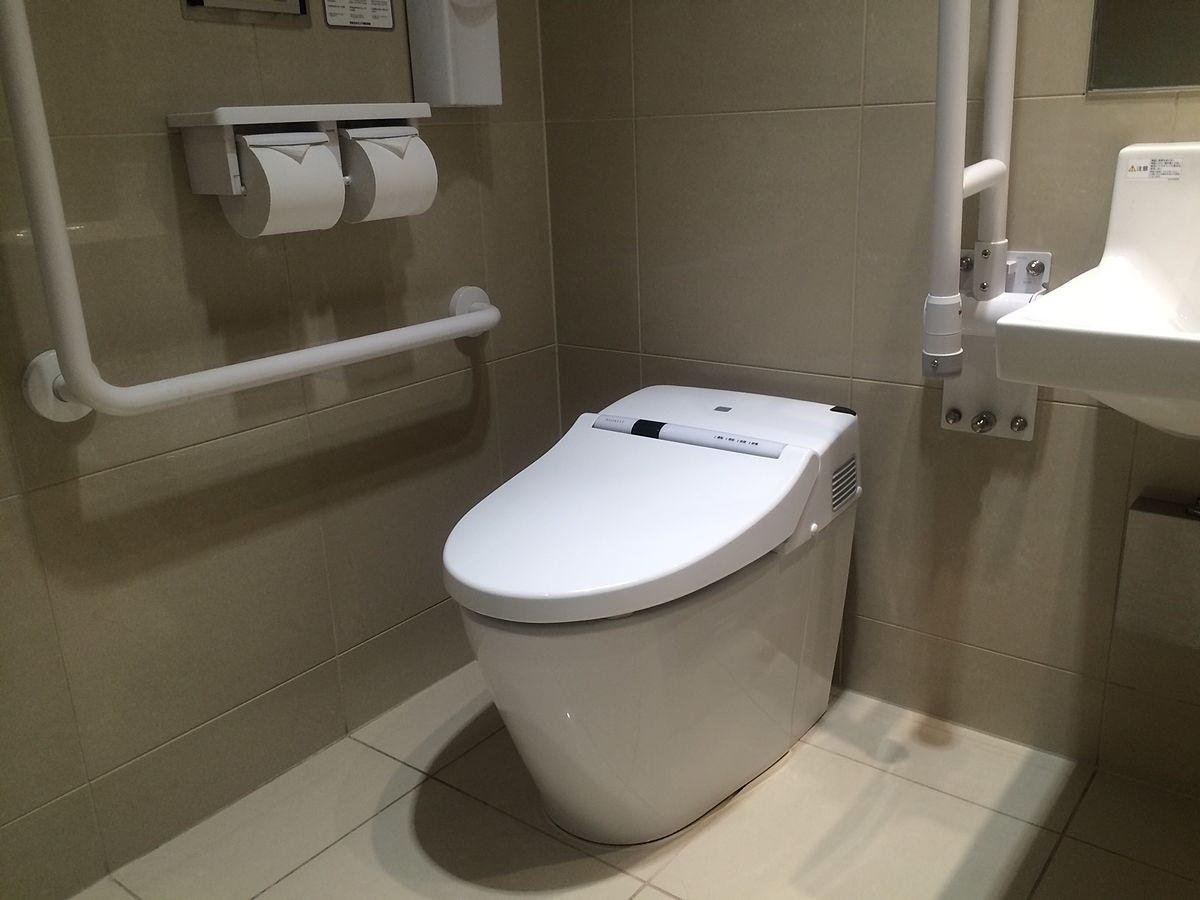
American comedian Jimy Kimmel was blown away by Japan’s bathrooms【Video】Yeah, Japan is pretty cool. The city of Kyoto and its historic sites, the food, the buildings, all of Japan is cool. But hey, who doesn’t like a good bathroom 🙄 . I will add, anyone can buy a Toto brand retrofit bidet style seat for just about any American toilet. The only thing you need is a convenient outlet to power the seat. And then you too can have a little bit of the Jimmy Kimmel experience every day.
-
Redis Adopts Dual Source-Available Licensing
Redis Adopts Dual Source-Available Licensing Well this sucks: after fifteen years (and contributions from more than 700 people), Redis is dropping the 3-clause BSD license going forward, instead being “dual-licensed under the Redis Source Available License (RSALv2) and Server Side Public License (SSPLv1)” from Redis 7.4 onwards. Via @msw
Redis Adopts Dual Source-Available LicensingA little worried now because I know for a fact Mastodon uses Redis as ots message queue, federation engine on part, along with keeping all the notices going back and forth to people you follow and follow you. Seems like these changes in licensing keep happening.
-
Dare to stare into the AI and it will train on your data.
https://heartsoulmachine.com/blog/2024/03-02-understanding-and-meaning
Tim Klapdor responds to some comments from Stephen Downes’s questions re: AI and what it actually does here. This is my fav pull-quote:
….,we perform the gestalt and apply the concepts that sit alongside it. We apply traits and behaviours that don’t actually exist. By doing so we become part of the hallucination of AI.
https://heartsoulmachine.com/blog/2024/03-02-understanding-and-meaning/ -Tim Klapdor blog “Heart Soul Machine” -
Moore’s Scofflaws
Years ago, Jeff Bezos famously quipped that “your margin is my opportunity.” This was of course aimed not at Amazon’s customers, but rather its competitors, and it was deadly serious: customers of AWS in those bygone years will fondly remember that every re:Invent brought with it another round of price cuts. This era did not…
Moore’s ScofflawsBryan Cantrell doing the work of pointing out what it is actually that “clouds” do here. Per core licensing for apps, services and all the like. What’s the point in that other than rent seeking B.S, especially if there’s no real competition in the market where your software competes. Lastly and this is truly the best pullquote EVAR:
Oxide: when you buy the Oxide cloud computer, all of the software to run it is included. This includes all of the software necessary to run the rack as elastic infrastructure: virtual compute, virtual storage, virtual networking. (And yes, it’s all open source — which unfortunately demands the immediate clarification that it’s actually open source rather than pretend open source.)
https://oxide.computer/blog/moores-scofflawsPretend open source,… so let click that link for you if you’re too busy/lazy to try seeing where this goes. Jay Kreps is the owner of a company named Confluent. They support, develop software as a service known as Apache Kafka. Kafka was a technology created at Linked in for handling “streaming data”, the kind of little messages en masse that a service like LinkedIn uses to handle posts, update to posts, and allow people to “Like” posts at scale. But LinkedIn decided to spin it out as a technology, open source it and let others benefit.
But now Confluent (Jay Krep’s company) offers Kafka to subscribers that want to use it, but not host it. The “license” terms that Confluent wrote up to accompany their product indicates you don’t own the software, you are merely being allowed to use it at the discretion of the real owner (Confluent). So while Apache Kafka is open source, and Confluent offers it to subscribers, that’s the sum total of open source-y-ness (to borrow the Steven Colbert metaphor). There’s no kimono being opened, just a kimono with the words “Open Source” printed on the outside of it. One can subscribe to Confluent, but having done so, cannot “compete” with Confluent using Confluent’s intellectual property (Apache Kafka and any of gimcracks, gewgaws, and jetsam and flotsam Confluent has added to make bits of it ‘proprietary’). So buyer beware if you are trying to develop a software project on someone else’s cloud platform. You may be in for a fight.
-
TVJay – stay calm,… he’s trained TV Engineer.
If you are the least bit interested in Broadcast TeeVee, RF transmissions, or Linux Home Lab types of topics,… get on over to TVJay’s channel on the YouTubes as fast as you can. I participate as much as I can in the chat. Fun will be had by all. And TVJay might get dispatched, call from his employer to dispatch and save the day!

