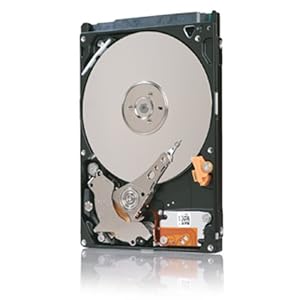
Category: flash memory

  • Hitachi GST ends STEC’s monopoly • The Register

    Hitachi GST flash drives are hitting the streets and, at last, ending STEC’s monopoly in the supply of Fibre Channel interface SSDs.

    EMC startled the enterprise storage array world by embracing STEC SSDs (solid state drives) in its arrays last year as a way of dramatically lowering the latency for access to the most important data in the arrays. It has subsequently delivered FAST automated data movement across different tiers of storage in its arrays, ensuring that sysadms don’t have to involved in managing data movement at a tedious and time-consuming level.

    via Hitachi GST ends STEC’s monopoly • The Register.

    In the computer world the data center is often the measure of all things in terms of speed and performance. Time was, the disk drive interface of choice was the SCSI drive and then it’s higher speed evolutions Fast/Wide UltraSCSI. But then a new interface hit that used fibre optic cables to move storage out of the computer box to a separate box that managed all the hard drives in one spot and this was called a Storage Array. The new connector/cable combo was named Fibre Channel and it was fast, fast, fast. It become the absolute brand name off all vendors trying to sell more and more hard drives into the data center. Newer evolved versions of Fibre Channel came to market, each one slightly faster than the rest. And eventually Fibre Channel was built right into the hard drives themselves, so that you could be assured the speed was native Fibre Channel 3Gigabytes per second from one end to the other. But Fibre Channel has always been prohibitively expensive though a lot of it has been sold over the years. Volume has not brought down the price of Fibre Channel one bit in the time that it’s been the most widely deployed disk drive interface. A few competitors have cropped up the old Parallel ATA and Serial ATA drives from the desktop market have attempted to compete. And a newer SCSI drive interface called Serial Attached SCSI is now seeing some wider acceptance. However the old guard who are mentally and emotionally attached to their favorite Fibre Channel drive interface are not about to give up even has spinning disk speeds have been trumped by the almighty Flash memory based solid state drive (SSD). And a company named STEC knew it could sell a lot of SSDs if only someone could put a Fibre Channel interface on the circuit board, allaying any fears of the Fibre Channel adherents that they needed to evolve and change.

    Yes it’s true STEC was the only game in town for what I consider the Fibre Channel legacy interface in old-line Storage Array manufacturers. They have sold tons of their drives to third parties who package up their wares into turnkey ‘Enterprise’ solutions for drive arrays and cache controllers (all of which just speed up things). And being the first-est with the most-est is a good business strategy until the second source of your product comes online. So it’s always a race to sell as much as you can until the deadline hits and everyone rushes to the second source. Here now is Hitachi’s announcement they are now manufacturing an SSD with a Fibre Channel interface onboard for the Enterprise data center customers.

  • LSI Launches $11,500 SSD, Crushes Other SSDs

    Tuesday LSI Corp announced the WarpDrive SLP-300 PCIe-based acceleration card, offering 300 GB of SLC solid state storage and performance up to 240,000 sustained IOPS. It also delivers I/O performance equal to hundreds of mechanical hard drives while consuming less than 25W of power–all for a meaty $11,500 USD.

    via LSI Launches $11,500 SSD, Crushes Other SSDs.

    This is the cost of entry for anyone working on an Enterprise Level project. You cannot participate unless you can cross the threshold of a PCIe card costing $11,500 USD. This is the first time I have seen an actual price quote on one of these cards that swims in the Data center consulting and provisioning market. Fusion-io cannot be too far off of this price when it’s not sold as a full package as part of a larger project RFP. I am somewhat stunned at the price premium, but LSI is a top engineering firm and they definitely can design their own custom silicon to get the top speed out of just about any commercial off the shelf Flash memory chips. I am impressed they went with the PCI Express (8X) 8 lane interface. I’m guessing that’s a requirement for more server owners whereas 4X is for the desktop market. Still I don’t see any 16X interfaces as of yet (that’s the interface most desktops use for their graphics cards from AMD and nVidia). One more part that makes this a premium offering is the choice of Single Level Cell Flash memory chips for the ultimate in speed and reliability along with the Serial Attached Storage interface onboard the PCIe card itself. Desktop models opt for SATA to PCI-X to PCI-e bridge chips forcing you to translate and re-order your data multiple times. I have a feel SAS bridges to PCI-e at the full 8X interface speeds and that is the key to getting faster than 1,000 MB/sec. speeds for write and reads. This part is quoted as getting in the range of ~1,400 MB/sec. and other than some very expensive turnkey boxes from manufacturers like Violin, this is a great user installable part to get the benefit of a really fast SSD drive array on a PCIe card.

  • A Quick Look at OCZ’s RevoDrive x2 – AnandTech


    Serial Attached SCSI drive connector
    SATA hard drive Interface – Image via Wikipedia


    What OCZ (and other companies) ultimately need to do is introduce a SSD controller with a native PCI Express interface (or something else other than SATA). SandForce’s recent SF-2000 announcement showed us that SATA is an interface that simply can’t keep up with SSD controller evolution. At peak read/write speed of 500MB/s, even 6Gbps SATA is barely enough. It took us years to get to 6Gbps SATA, yet in about one year SandForce will have gone from maxing out 3Gbps SATA on sequential reads to nearing the limits of 6Gbps SATA.

    via A Quick Look at OCZ’s RevoDrive x2: IBIS Performance without HSDL – AnandTech :: Your Source for Hardware Analysis and News.

    It doesn’t appear the RevoDrive X2 is all that much better than four equivalent sized SSD drives in a four drive RAID Level 0 array. But hope springs eternal, and the author sums up where manufacturers should go with their future product announcements. I think everyone agrees SATA is the last thing we need to get full speed out of the Flash based SSDs, we need SandForce controllers with native PCIe interfaces and then maybe we will get our full money’s worth out of the SSDs we will buy in the near future. As an enterprise data center architect, I would seriously be following these product announcements and architecture requirements. Shrewdly choosing your data center storage architecture (what mix of spinning disks and SSD do you really need) will be a competitive advantage for data mining, Online Transaction Processing, and Cloud based software applications.

    Until this article came out yesterday I was unaware that OCZ had an SSD product with a SAS (Serial Attached SCSI) interface. That drive is called the IBIS and OCZ describes the connector as HSDL (High Speed Data Link-an OCZ created term). Benchmarks of that device have shown it to be faster than it’s RevoDrive counterpart which uses an old style native hard drive interface (SATA). Anandtech is lobbying to dump SATA altogether even now that the most recent SATA version supports higher throughput (so called SATA 6). The legacy support built into the SATA interface is absolutely unnecessary given the speed of today’s flash memory chips and the SSDs they are designed into. SandForce has further complicated the issue by showing that their drive controllers can vastly out pace even SATA 6 drive interfaces. So as I have concluded in previous blog entries PCIe is the next logical and highest speed option after you look at all the spinning hard drive interfaces currently on the market. The next thing that needs to be addressed is the cost of designing and building these PCIe based SSD drives in the coming year. $1200 seems to be the going price for anything in the 512GB range with roughly 700MB/second data throughput. Once the price goes below the $1,0000 mark, I think the number of buyers will go up (albeit still niche consumers like PC Gamers). In the end we can only benefit by manufacturers dumping SATA for the PCIe interface and the Anandtech quote at the top of the blog, really reinforces what I’ve been observing so far this year.

  • OCZ Reveals New Bootable PCIe SSD (quick comparison to Angelbird PCIe)

    PCI Express slots (from top to bottom: x4, x16...
    Image via Wikipedia

    Box packaging for the RevoDrive
    First version of the RevoDrive PCIe

    Building upon the original 1st-generation RevoDrive, the new version boasts speeds up to 740 MB/s and up to 120,000 IOPS, almost three times the throughput of other high-end SATA-based solutions.

    via OCZ Reveals New Bootable PCIe SSD.

    One cannot make this stuff up, two weeks ago Angelbird announced its bootable PCI Express SSD. Late yesterday OCZ one of the biggest 3rd party after market makers of SSDs announces a new PCI Express SSD which is also bootable. Big difference between the Angelbird product and OCZ’s RevoDrive is the throughput on the top end. This means if you purchase the most expensive fully equipped card from either manufacturer you will get 900+MBytes/sec. on the Angelfire versus 700+MBytes/sec. on the Revodrive from OCZ. Other differences include the ‘native’ support of the OCZ on the Host OS. I think this means that they aren’t using the ‘virtual OS’ on the embedded chips to boot so much as having the PCIe drive electronics make everything appear to be a real native boot drive. Angelbird uses an embedded OS to virtualize and abstract the hardware so that you get to boot any OS you want and run it off the flash memory onboard.

    The other difference I can see from reading the announcements is that only the largest configured size on the Angelbird that gets you the fastest throughput. As drives are added the RAID array is striped over more available flash drives. The OCZ product also does a RAID array to increase speed, however they hit the maximum throughput at an intermediate size (~250GByte configuration) and at the maximum size too. So if you want an ‘normal’ to ‘average’ size storage but better throughput you don’t have to buy the maxed out most expensive version of the OCZ RevoDrive to get there. Which means this could be a more manageable price for the gaming market or for the PC fanboys who want faster boot times. Don’t get me wrong though, I’m not recommending buying an expensive 250GByte RevoDrive if a similarly sized SATA SSD costs a good deal less. No far from it, the speed difference may not be worth the price you pay. But, the RevoDrive could be upgraded over time and keep your speeds at the max 700+MBytes/sec. you get with its high throughput intermediate configuration. Right now, I don’t have any prices to compare for either the Angelbird or OCZ Revodrive products. I can tell you however that the Fusion-io low end desktop product is in the $700-$800 range and doesn’t come with upgradeable storage, you get a few sizes to choose from, and that’s it. If either of the two products ship at a price significantly less than the Fusion-io product everyone will flock to them I’m sure.

    Two other significant features touted by both product announcements are the SandForce SF-1200 flash controller. Right now that controller is the de facto standard high throughput part everyone is using for the SATA SSD products. There’s even an intermediate part on the market called the SF-1500 (their top end offering). So it’s de rigeur to include the SandForce SF-1200t in any product you hope to sell to a wide audience (especially hardware fanboys). However, let me caution you that in the flurry of product announcements and always keeping an eye on preventing buyers remorse, SandForce did announce very recently a new drive controller they have labelled the SF-2000 series. This part may or may not be targeted for the consumer desktop market, but depending on how well it performs once it starts shipping you may want to wait and see if the revision of this crop of newly announced PCIe cards adopts the SandForce controller chip to gain the extra throughput it is touting. The new controller is rated at 740MBytes/sec. all by itself, with 4 SSDs attached to it on a PCIe card, theoretically four times 740 equals 2,096 and that is a substantially large quantity of data coming through th PCI Express data bus. Luckily for most of us the PCI Express interface on a 4X (four lane) data bus has a while to go before it gets saturated by all this disk throughput. The question is how long will it take to overwhelm the a four lane PCI Express connector? I hope to see the day this happens.

  • Intel forms flash gang of five • The Register

    Intel, Dell, EMC, Fujitsu and IBM are forming a working group to standardise PCIe-based solid state drives SSD, and have a webcast coming out today to discuss it.

    via Intel forms flash gang of five • The Register.

    Now this is interesting in that just two weeks after Angelbird pre-announces its own PCIe flash based SSD product, now Intel is forming a consortium. Things are heating up, this is now a hot new category and I want to draw your attention to a sentence in this Register article:

    By connecting to a server’s PCIe bus, SSDs can pour out their contents faster to the server than by using Fibre Channel or SAS connectivity. The flash is used as a tier of memory below DRAM and cuts out drive array latency when reading and writing data.

    This is without a doubt the first instance I have read that there is a belief, even just in the minds of the author of this article, that Fibre Channel and Serial Attached SCSI aren’t fast enough. Who knew PCI Express would be preferable to an old storage interface when it comes to enterprise computing? Lookout world, there’s a new sheriff in town and his name is PCIe SSD. This product category though will be not for the consumer end of the market at least not for this consortium. It is targeting the high margin, high end, data center market where interoperability keeps vendor lock-in from occurring. By choosing interoperability everyone has to gain an advantage not through engineering necessarily but through firmware most likely. If that’s the differentiator than whomever has the best embedded programming team will have the best throughput and the highest rated product. Let’s hope this all eventually finds a market saturation point driving the technology down into the consumer desktop, thus enabling a next big burst in desktop computer performance. I hope PCIe SSD’s become the next storage of choice and that motherboards can be rid of all SATA disk I/O ports and firmware in the near future. We don’t need SATA SSDs, we do need PCIe SSDs.

  • Angelbird to Bring PCIe SSD on the Cheap and Iomega has a USB 3 external SSD


    msystems
    Image via Wikipedia


    From Tom’s Hardware:

    Extreme SSD performance over PCI-Express on the cheap? There’s hope!

    A company called Angelbird is working on bringing high-performance SSD solutions to the masses, specifically, user upgradeable PCI-Express SSD solution.

    via Angelbird to Bring PCIe SSD on the Cheap.

    This is one of a pair of SSD announcements that came in on Tuesday. SSDs are all around us now and the product announcements are coming in faster and harder. The first one, is from a British company named Angelbird. Looking at the website announcing the specs of their product, it is on paper a very fast PCIe based SSD drive. Right up there with Fusion-io in terms of what you get for the dollars spent. I’m a little concerned however due to the reliance of an OS hosted in the firmware of the PCIe card. I would prefer something a little more peripheral like that the OS supports natively, rather than have the card become the OS. But this is all speculative until actual production or test samples hit the review websites and we see some kind of benchmarks from the likes of Tom’s Hardware or Anandtech.

    From MacNN|Electronista:

    Iomega threw itself into external solid-state drives today through the External SSD Flash Drive. The storage uses a 1.8-inch SSD that lets it occupy a very small footprint but still outperform a rotating hard drive:

    Read more: http://www.electronista.com/articles/10/10/15/iomega.outs.external.usb.30.ssd/

    The second story covers a new product from Iomega where we have for the first time an external SSD from a mainstream manufacturer. Price is at premium compared to the performance, but if you like the looks you’ll be willing to pay. It’s not bad speeds for reading and writing, but it’s not the best compared to the amount of money you’re paying. And why do they still use a 2.5″ external case if it’s internally a 1.8″ drive? Couldn’t they shrink it down to the old Firefly HDD size from back in the day? It should be the smaller.

  • May the SandForce be with you • The Register


    Image representing SandForce as depicted in Cr...
    Image via CrunchBase


    SandForce has now announced an SF-2000 controller that doubles up the I/O performance of the SF-1500. The new product runs at 60,000 sustained read and write IOPS and does 500MB/sec when handling read or write data. It uses a 6Gbit/s SATA interface and SandForce says it can make use of single-level cell flash, MLC or the enterprise MLC put out by Micron.

    via May the SandForce be with you • The Register.

    Sandforce is continuing to make great strides in its SSD disk controller architecture. There’s no stopping the train now. But as always read the fine print on any SSD product you buy and find out who manufactures the drive controller and what version it is. Benchmarks are always a good thing to consult too before you buy.

  • Micron intros SSD speed king • The Register

    The RealSSD P300 comes in a 2.5-inch form factor and in 50GB, 100GB and 200GB capacity points, and is targeted at servers, high-end workstations and storage arrays. The product is being sampled with customers now and mass production should start in October.

    via Micron intros SSD speed king • The Register.

    Sandisk C300 ssd drive
    The C300 as it appears on Anandtech.com

    I am now for the first time after SSDs have hit the market looking at the drive performance of each new product being offered. What I’ve begun to realize is the speeds of each product are starting to fall into a familiar range. For instance I can safely say that for a drive in the 120GB range with Multi-Level Cells you’re going to see a minimum 200MB/sec read/write speeds (writing is usually faster than reading by some amount on every drive). This is a vague estimate of course, but it’s becoming more and more common. Smaller size drives have slower speeds and suffer on benchmarks due in part to the smaller number of parallel data channels. Bigger capacity drives have more channels and therefore can write more data per second. A good capacity for a boot/data drive is going to be in the 120-128GB category. And while it won’t be the best for archiving all your photos and videos, that’s fine. Use a big old 2-3TB SATA drive for those heavy lifting duties. I think that will be a more common architecture in the future and not a premium choice as it is now. SSD for boot/data and typical HDD for big archive and backup.

    On the enterprise front things are a little different speed and throughput are important, but the drive interface is as well. With SATA being the most widely used interface for consumer hardware, big drive arrays for the data center are wedded to a form of Serial Attached Storage (SAS) or Fibre Channel (FC). So now manufacturers and designers like Sandisk need to engineer niche products for the high margin markets that require SAS or FC versions of the SSD. As was the case with the transition from Parallel ATA top Serial ATA, the first products are going to SATA to X interface adapters and electronics on board to make them compatible. Likely this will be the standard procedure for quite a while as a ‘native’ Fibre or SAS interface will require a bit of engineering to be done and cost increases to accommodate the enterprise interfaces. Speeds however will likely always be tuned for the higher volume consumer market and the SATA version of each drive will likely be the highest possible throughput version in each drive category. I’m thinking that the data center folks should adapt and adjust and go with the consumer level gear or adopt SATA SSDs now that the drives are not mechanically spinning disks. Similarly as more and more manufacturers are also doing their own error correction and wear leveling on the memory chips in SSDs the reliability will be equal to or exceed that of a FC or SAS spinning disks.

    And speaking of spinning disks, the highest throughput I’ve ever seen quoted for a SATA disk was always 150MB/sec. Hands down that was theoretically the best it could ever do. More likely you would only see 80MB/sec (which takes me back to the old days of Fast/Wide SCSI and the Barracuda). Given the limits of moving media like spinning disks and read/write heads tracking across their surface, Flash throughput is just stunning. We are now in an era that while the Flash SSDs are slower than RAM, they are awfully fast and fast enough to notice when booting a computer. I think the only real speed enhancement beyond the drive interface is to put Flash SSDs on the motherboard directly and build a SATA drive controller directly on the CPU to make read/write requests. I doubt it would be cost effective for the amount of improvement, but it would eliminate some of the motherboard electronics and smooth the flow a bit. Something to look for certainly in netbook or slate style computers in the future.

  • OCZ’s RevoDrive Preview: An Affordable PCIe SSD – AnandTech

    We have seen a turnaround however. At last year’s IDF Intel showed off a proof of concept PCIe SSD that could push 1 million IOPS. And with the consumer SSD market dominated by a few companies, the smaller players turned to building their own PCIe SSDs to go after the higher margin enterprise market. Enterprise customers had the budget and the desire to push even more bandwidth. Throw a handful of Indilinx controllers on a PCB, give it a good warranty and you had something you could sell to customers for over a thousand dollars.

    via OCZ’s RevoDrive Preview: An Affordable PCIe SSD – AnandTech :: Your Source for Hardware Analysis and News.

    Anandtech does a review of the OCZ RevoDrive. A PCIe SSD for the consumer market. It’s not as fast as a Fusion-io, but then it isn’t nearly as expensive either. How fast is it say compared to a typical SATA SSD? Based on the benchmarks in this review it seems as though the RevoDrive is a little faster than most SATA SSDs, but it also costs about $20 more than a really good 120GB SSD. Be warned that this is the Suggest Retail price, and no shipping product yet exists. Prices may vary once this PCIe card finally hits the market. But I agree 100% with this quote from the end of the review:

    “If OCZ is able to deliver a single 120GB RevoDrive at $369.99 this is going to be a very tempting value.”

    Indeed, much more reasonable than a low end Fusion-io priced closer to $700+, but not as fast either. You picks your products, you pays yer money.

  • Seagate, Toshiba to Make SSD + HDD Hybrid?

    Seagate, Toshiba to Make SSD + HDD Hybrid?.

    Some people may remember the poorly marketed and badly implemented Microsoft ReadyBoost technology hyped prior to the launch of Windows Vista. Microsoft’s intention was to speed throughput on machines without sufficient RAM memory to cache large parts of the Windows OS and shared libraries. By using a small Flash memory module on

    Intel Turbo memory module for PCIe
    Intel Turbo Memory to be used as ReadyDrive storage cache

    the motherboard (Intel’s Turbo Memory) or by using a USB connected Flash memory stick one could create a Flash memory cache that would offset the effect of having 512MB or less RAM installed. In early testing done by folks like Anandtech and Tom’s Hardware system performance suffered terribly on computers with more than the 512MB of RAM targeted by Microsoft. By trying to use these techniques to offset the lack of RAM on computers with more than 512MB of RAM the computers ran slower using Vista. I had great hopes ReadyBoost at the time the flash cache method of speeding throughput on a desktop PC was heralding a new early of desktop PC performance. In the end it was all a myth created by the Microsoft marketing department.

    Some time has passed since then Vista was released. RAM prices have slowly gone down. Even low end machines have more than adequate RAM installed to run Vista or now Windows 7 (no more machines with 512MB of RAM). The necessity of working around those limits of RAM is unnecessary. However total system level I/O has seen some gains through using somewhat expensive Flash based SSD (solid state disks). Really this is what we have all been waiting for all along. It’s flash memory modules like the ones Intel tried using for it’s  ReadyDrive capable Turbo Memory technology. However these were wired into a PCIe controller and optimized for fast I/O, faster than a real spinning hard disk. The advantage over the ReadyBoost was the speed of the PCIe interface connected to the Flash memory chips. Enterprise data centers have begun using some Flash SSDs as caches with some very high end product using all Flash SSDs in their storage arrays. The entry level price though can be daunting to say the least. 500GB SSD disks are the top of the line, premium priced products and not likely to be sold in large quantity until the prices come down.

    Seagate is now offering a product that has a hybrid Flash cache and spinning disk all tied into one SATA disk controller.

    Seagate hybrid hard drive
    Seagate Momentus XT

    The beauty of this design is the OS doesn’t enter into the fray. So it’s OS agnostic. Similarly the OS doesn’t try to be a disk controller. Seagate manages all the details on its side of the SATA controller and OS just sees what it thinks is a  hard disk that it sends read/write commands. In theory this sounds like a step up from simple spinning disks and maybe a step below a full flash based SSD. What is the performance of a hybrid drive like this?

    As it turns out The Register did publish a follow-up with a quick benchmark (performed by Seagate) of the Seagate Moments XT compared to middle and top of the line spinning hard drives. The Seagate hybrid drive performs almost as well as an the Western Digital SSD included in the benchmark. That flash memory caches the stuff that needs quick access, and is able to refine what it stores over time based on what it is accessed most often by the OS. Your boot times speed up, file read/write times speed up all as a result of the internal controller on the hybrid drive. The availability if you check Amazon’s website is 1-2months which means you and I cannot yet purchase this item. But it’s encourage and I would like to see some more innovation in this product category. No doubt lots of optimization and algorithms can be tried out to balance the Flash memory and spinning hard disks. I say this because of the static ram cache that’s built into the Momentus XT which is 32MBytes in size. Decide when data goes in and out, which cache it uses (RAM or Flash) and when it finally gets written to disk is one of those difficult Computer Science type optimization problems. And there are likely as many answers as there are Computer Scientists to compute the problem. There will be lots of room to innovate if this product segment takes hold.