
One of the sources of Audrey Watters piece is this article by Jer Thorp in the Harvard Business Review.
Category: technology
General technology, not anything in particular
-
AnandTech | Samsung SSD XP941 Review: The PCIe Era Is Here

Mini PCI-Express Connector on Inspiron 11z Motherboard, Front (Photo credit: DandyDanny) I don’t think there is any other way to say this other than to state that the XP941 is without a doubt the fastest consumer SSD in the market. It set records in almost all of our benchmarks and beat SATA 6Gbps drives by a substantial margin. It’s not only faster than the SATA 6Gbps drives but it surpasses all other PCIe drives we have tested in the past, including OCZ’s Z-Drive R4 with eight controllers in RAID 0. Given that we are dealing with a single PCIe 2.0 x4 controller, that is just awesome.
via AnandTech | Samsung SSD XP941 Review: The PCIe Era Is Here.
Listen well as you pine away for your very own SSD SATA drive. One day you will get that new thing. But what you really, really want is the new, NEW thing. And that my friends is quite simply the PCIe SSD. True the enterprise level purchasers have had a host of manufacturers and models to choose from in this form factor. But the desktop market cannot afford Fusion-io products at ~15K per card fully configured. That’s a whole different market there. RevoDrive has had a wider range of products that go from heights of Fusion-io down to the top end Gamer market with the RevoDrive R-series PCIe drives. But those have always been SATA drives piggy-backed onto a multi-lane PCIe card (4x or 8x depending on how many controllers were installed onboard the card). Here now the evolutionary step of dumping SATA in favor of a more native PCIe to NAND memory controller is slowly taking place. Apple has adopted it for the top end Mac Pro revision (the price and limited availability has made it hard to publicize this architectural choice). It has also been adopted in the laptops available since Summer 2013 that Apple produces (and I have the MacBook Air to prove it). Speedy, yes it is. But how do I get this on my home computer?
Anandtech was able to score an aftermarket card through a 3rd party in Australia along with a PCIe adapter card for that very Samsung PCIe drive. So where there is a will, there is a way. From that purchase of both the drive and adapter, this review of the Samsung PCIe drive has come about. And all one can say looking through all the benchmarks is we have not seen anything yet. Drive speeds which have been the bottle-neck in desktop and mobile computing since the dawn of the Personal Computer are slowly lifting. And not by a little but by a lot. This is going to herald a new age in personal computers that is as close to former Intel Chairman, Andy Grove’s 10X Effect. Samsung’s PCIe native SSD is that kind of disruptive, perspective altering product that will put all manufacturers on notice and force a sea change in design and manufacture.
As end users of the technology SSD’s with SATA interfaces have already had a big time impact on our laptops and desktops. But what I’ve been writing about and trying to find signs of ever since the first introduction of SSD drives is the logical path through the legacy interfaces. Whether it was ATA/BIOS or the bridge chips that glue the motherboard to the CPU, a number of “old” architecture items are still hanging around on the computers of today. Intel’s adoption of UEFI has been a big step forward in shedding the legacy bottleneck components. Beyond that native on CPU controllers for PCIe are a good step forward as well. Lastly the sockets and bridging chips on the motherboard are the neighborhood improvements that again help speed things up. The last mile however is the dumping of the “disk” interace, the ATA/SATA spec as a pre-requisite for reading data off of a spinning magnetic hard drive. We need to improve that last mile to the NAND memory chips and then we’re going to see the full benefit of products like the Samsung PCIe drive. And that day is nearly upon us with the most recent motherboard/chipset revision from Intel. We may need another revision to get exactly what we want, but the roadmap is there and all the manufacturers had better get on it. As Samsung’s driving this revolution,…NOW.
Related articles

-

VLC is getting Chromecast support for iOS and desktop versions
VLC is without a doubt one of the best desktop/mobile apps. It has been around so long and continuously improved and recompiled to take advantage of each platform on which it’s built, few media players can match it. It is the the Swiss Army knife of media players and it keeps solidiering on and on. If they can get VLC to work with Chromecast screensharing that would be a real accomplishment. I wish the whole VLC developers team a lot of luck.
The popular open source media player VLC could get Chromecast support soon: VLC developers recently confirmed on the official VideoLAN forum that they’re currently working on bringing Chromecast support to the media player (hat tip to Reddit user badgerflower). Lead OSX and iOS developer Felix Paul Kühne wrote:
“In addition to the iOS variant, we are also working on a Windows / Linux / Mac implementation, which will take a bit longer because it’s harder.”
Enabling casting from the desktop app is likely harder because Google (S GOOG) hasn’t released an SDK for native apps on Windows, Mac or Linux yet. This means that the VLC team would either have to reverse engineer the functionality — which could lead to updates breaking it — or have VLC work in concert with the Chrome browser.
VLC is an open source video player application that’s popular because it’s capable of playing close…
View original post 34 more words
-
Meet the godfather of wearables | The Verge

Stasi HQ building, Berlin, Germany (Photo credit: Wikipedia) He continues, “People are upset about privacy, but in one sense they are insufficiently upset because they don’t really understand what’s at risk. They are looking only at the short term.” And to him, there is only one viable answer to these potential risks: “You’re going to control your own data.” He sees the future as one where individuals make active sharing decisions, knowing precisely when, how, and by whom their data will be used. “That’s the most important thing, control of the data,” he reflects. “It has to be done correctly. Otherwise you end up with something like the Stasi.”
via Meet the godfather of wearables | The Verge.
Sounds a little bit like VRM and a little bit like Jon Udell‘s Thali project. Wearables don’t fix the problem of metadata being collected about you, no. You still don’t control those ingoing/outgoing feeds of information.
Sandy Pentland points out a lot can be derived and discerned simply from the people you know. Every contact in your friend list adds one more bit of intelligence about you without anyone ever talking to your directly. This kind of analysis is only possible now due to the End User License Agreements posted by each of the collecting entities (so-called social networking websites).
An alternative to this wildcat, frontier mentality by data collectors is Vendor Relationship Management (as proposed in the Cluetrain Manifesto) Doc Searls wants people to be able to share the absolute minimum necessary in order to get what they want or need from vendors on the Internet, especially the data collecting types. And then from that point if an individual wants to share more, they should get rewarded with a higher level of something in return from the people they share with (prime example are vendors, the ‘V’ in VRM).
Thali in another way allows you to share data as well. But instead of letting someone into your data mesh in an all or nothing way, it lets strongly identified individuals have linkages into our out of your own data streams whatever form those data streams may take. I think Sandy Pentland, Doc Searls and Jon Udell would all agree there needs to be some amount of ownership and control ceded back to the individual going forward. Too many of the vendors own the data and the metadata right now, and will do what they like with it including responding to National Security Letters. So instead of being a commercial venture, they are swiftly evolving into branches or defacto subsidiary of the National Security Agency. If we can place controls on the data, we’ll maybe get closer to the ideal of social networking and controlled data sharing.
Related articles
-
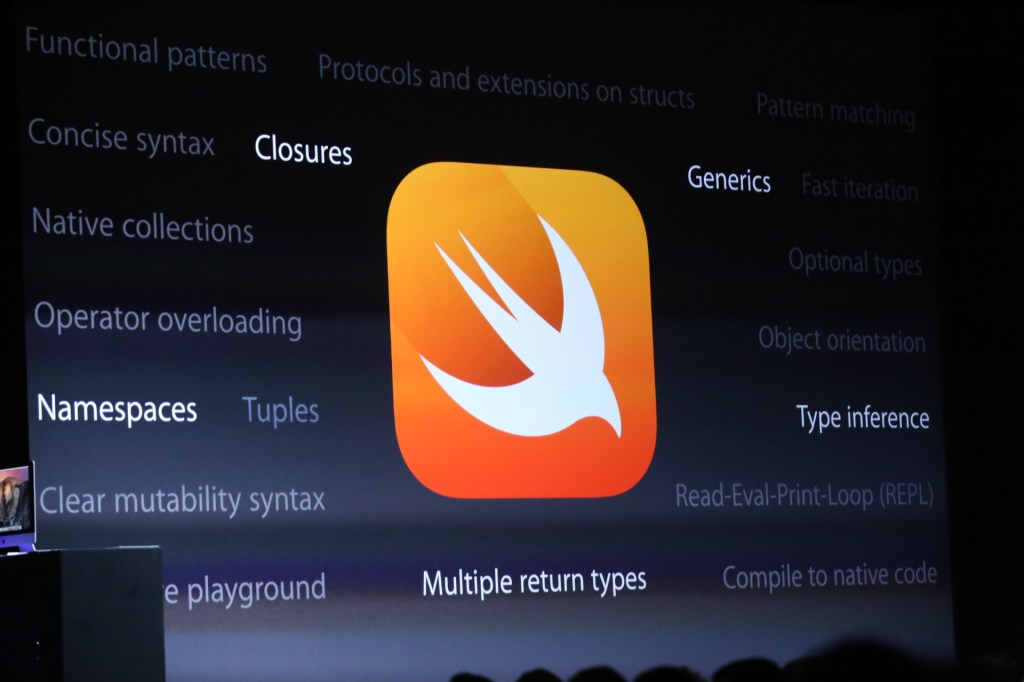
Apple Launches Swift, A New Programming Language For Writing iOS And OS X Apps
I remember the first big lurching migrations in Developer’s Tools when the PowerPC came into view (CodeWarrior marked the move from Pascal to C), then subsequent to that OS 9 to OS X (moved from C to Objective-C) then the last big migration was from PowerPC to Intel. Now today we got Swift to mark the next migration from Objective-C to a faster language altogether.
-
Testing, Testing: How Google And Amazon Can Help Make Websites Rock Solid – ReadWrite

It’s not unprecedented: Google already offers a testing suite for Android apps, though that’s focused on making sure they run well on smartphones and tablets, not testing the cloud-based services they connect to. If Google added testing services for the websites and services those apps connect to, it would have an end-to-end lock on developing for both the Web and mobile.
via Testing, Testing: How Google And Amazon Can Help Make Websites Rock Solid – ReadWrite.
Load testing websites and web-apps is a market whose time has come. I know where I work we have Project group who has a guy who manages an installation of Silk as a load tester. Behind that is a little farm of old Latitude E6400s that he manages from the Silk console to point at whichever app is in development/QA/testing before it goes into production. Knowing there’s potential for a cloud-based tool for this makes me very, very interested.
As outsourcing goes, the Software as a Service (SaaS) or Platform as a Service (PaaS) or even Infrastructure as a Service (IaaS) categories are great as raw materials. But if there was just an app that I could login to, spin up some VMs install my load-test tool of choice and then manage them from my desktop, I would feel like I had accomplished something. Or failing that even just a toolkit for load testing with whatever tool du jour is already available (nothing is perfect that way) would be cool too. And better yet, if I could do that with an updated tool whenever I needed to conduct a round of testing, the tool would take into account things like the Heart Bleed bug in a timely fashion. That’s the kind of benefit a cloud-based, centrally managed, centrally updated Load Test service could provide.
And now as Microsoft has just announced a partnership with Salesforce on their Azure cloud platform, things get even more interesting. Not only could you develop using an existing toolkit like Salesforce.com, but host it on more than one cloud platform (AWS or Azure) as your needs change. And I would hope this would include unit test, load test and the whole sweet suite of security auditing one would expect for a webapp (thereby helping prevent vulnerabilities like HeartBleed OpenSSL).
Related articles
-

TrueCrypt, An Open-Source Whole-Disk Encryption System, Leaves Users High And Dry
More word on TrueCrypt closing up shop and taking out one of the best full disk encryption utilities available for free or for money.
-

Justin.tv gets rid of its archives, discontinues premium service
Always remember, clouds may come and clouds may go but always cover your butt. Get local copies of everything even when it seems like a rock solid, long term player. If all your stuff is in Google’s Cloud, can you really say you “own” your videos hosted there? I’m sure more than a few people felt the same way about any of their Justin.tv videos too.
Pioneering live video streaming site Justin.tv is getting rid of all of its archived content, and won’t offer the ability to record and archive any live streams going forward. The company made the announcement in a blog post this week, which read in part:
“We found that more than half of our VODs are unwatched (with 0 or 1 total views), while the vast majority are rarely watched (with 10 or less views). This data was essential in better understanding how our service is being used. (…) It’s quite clear: JTV is a home for live broadcasts. Viewers come to justin.tv because they want to consume content and interact with their communities in real-time.”
The changes will go into effect on June 8, which is also when Justin.tv will delete all previously archived content. Also affected will be broadcasters who have been paying for a premium account, which previously…
View original post 132 more words
-

Here’s what you need to know about the sudden and mysterious death of TrueCrypt
Not just weirded out but truly Disturbing. TrueCrypt has shutdown. Outside of PGP, there or unix freeware alternatives there isn’t a free desktop full-disk encryption utility for Windows. This is like Lavabit.com vanishing into thin air. Wonder if it’s related to Edward Snowden like Lavabit was.
The web security scene is thoroughly weirded out following the abrupt and inexplicable closure of the TrueCrypt project.
TrueCrypt was an anonymously authored piece of disk encryption software that came well-recommended — even Edward Snowden was keen on teaching people how to use it. It allowed users to create hidden volumes whose very existence would only be revealed with a secret password. This “plausible deniability” aspect was designed to protect users facing physical or legal attackers, who would remain ignorant of the secret compartment’s existence and would therefore not start breaking kneecaps or threatening jail terms in order to find the password.
Any excuse for an XKCD comic:

So long…
Sometime on Wednesday, a message went up on the TrueCrypt web page, announcing that the software was “not secure as it may contain unfixed security issues,” before going on to state:
“This page exists only to help migrate…
View original post 660 more words





 Carpet Bomberz Inc.