Category: technology

General technology, not anything in particular

  • Disk I/O: PCI Based SSDs (via makeitfaster)

    Great article and lots of hardcore important details like drivers and throughput. It’s early days yet for the PCI based SSDs, so there’s going to be lots of changes and architectures until a great design or a cheap design begins to dominate the market. And while some PCIe cards may not be ready for the Enterprise Data Center, there may be a market in the high end gamer fanboy product segment. Stay Tuned!

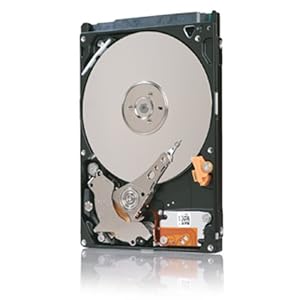
    Disk I/O: PCI Based SSDs The next step up from a regular sata based Solid State Disk is the PCIe based solid state disk. They bypass the SATA bottleneck and go straight through the PCI-Express bus, and are able to achieve better throughput. The access time is similar to a normal SSD, as that limit is imposed by the NAND chips themselves, and not the controller. So how is this different than taking a high end raid controller in a PCIe slot and slapping 8 or 12 good SSDs o … Read More

    via makeitfaster

  • Announcing the first free software Blu-ray encoder

    Diary Of An x264 Developer » (4/25/2010)

    For many years it has been possible to make your own DVDs with free software tools.  Over the course of the past decade, DVD creation evolved from the exclusive domain of the media publishing companies to something basically anyone could do on their home computer.

    The move towards Blu-ray encoding is very encouraging. In reading the article I don’t see a mention of CUDA or OpenCL acceleration of the encoding process. As was the case for MPEG-2 a glaring need for acceleration of the process was painfully obvious once people started converting long form videos. I know x264 encoding can be accelerated by splitting threads across CPUs on a multi-core processor. But why not unleash the floodgates and get some extra horsepower from the ATI or nVidia graphics card too. We’re talking large frames and large frame rates and the only way to guarantee adoption of the new format is to make the encoding process fast, fast, fast.

  • Apple admits to eating ‘iPad chip designer’ • The Register

    Last year, Samsung told the world it had teamed with Instrinsity on a 1GHz ARM chip known as the Hummingbird, and Samsung manufactures the ARM chips underpinning the Apple iPhone, a smaller version of the iPad. This has led many to assume that the Hummingbird architecture is the basis for the the A4.

    via Apple admits to eating ‘iPad chip designer’ • The Register.

    I am sure that Apple’s ability to act quickly and independently helped win them not just design expertise, but an actual nearly finished CPU in the form of the Hummingbird project. There does now seem to be a smartphone Megahertz War similar to the bad old days of desktop computing when AMD and Intel fought it out 1 gigahertz at a time. We will see what comes of this when the new iPhones come out this Summer. A4 may not translate into a handheld cpu form factor. But looking at the iFixit teardown of the iPad makes me think the iPad motherboard is almost the size of a cell phone! So who knows, maybe A4 is scalable down to iPhone as well. We’ll find out in June I’m sure when Apple hosts its Worldwide Developers Conference (WWDC) in San Francisco, CA.

  • Augmented Reality intersects with GPS Navigation

    smartphones and GPS
    It doesn't matter what device you use, it is all about the software

    TomTom is releasing a new personal navigation device (PND) called the TomTom Live 1000.  As part of this article from MacNN they mention TomTom is attempting to get into the App Store market by creating its own marketplace for TomTom specific software add-ons (like the Apple App Store). The reason is the cold war going on between device manufacturers gaining the upper hand by wholesale adoption of a closed application software universe. Google is doing it with Android and Apple has done it with the iPhone and iPad. Going all the way back to the iPod, there was interest in running games on those handheld devices, but no obvious way to ‘sell’ them, until the App Store came out. Now TomTom is following suit, by redesigning the whole TomTom universe using Webkit as a key component of it’s new OS on TomTom devices (Webkit is also being used in the Android based Garmin A10 phone too).  Ambivalent about the added value? Other than trying to gain some market share against PND manufacturers, Harold Goddijn, the CEO of TomTom says it’s all about innovation. They mention in passing the possibility of Augmented Reality apps for TomTom devices. But there’s a small matter of getting a video feed into the PND that can then be layered with the AR software. And honestly even the CEO Tom Goodjin is somewhat ambivalent about seizing the opportunity of Augmented Reality in the TomTom application store universe. As reported on Pocket-lint.com: “Although Goddjin confirmed that the company was looking at the possibility of adding augmented reality in to the mix, the niche technology isn’t a major objective for them.”

    It’s not enough to just overlay information on an Apple iPhone or TomTom PND screen showing related points of interest (POI). Like the iPhone Nearest Tube app from Acrossair, knowing the general compass direction to a subway station is useful. But full step-by-step navigating to it seems to be the next logical step, maps and all. What makes me think of this is the recent announcement of the Garmin A10 smartphone with GPS navigation. If Garmin, TomTom or an independent developer could mashup Augmented Reality with their respective navigation engines, whilst throwing  in a bit of Google Street View one might, just might have the most useful personal assistant for finding places on foot. Garmin has a whole slew of devices for the hiking, and bicycling market. They even offer walking/pedestrian directions on their automobile navigation devices. So the overlay of Augmented Reality/Point-of-Interest and full-on Garmin Navigation to me would be a truly killer app.

  • AppleInsider | Google to bring free turn-by-turn navigation to Apple iPhone (NOT)

    Google now denies they are releasing Google Maps for the iPhone. Take this whole article with a big grain of salt. I’m just glad I didn’t post this immediately after reading the original article on AppleInsider. By the end of the day last Friday April 23rd, Google was denying the rumor already. The moral of the story is look before you leap.

    Google this week said it plans to bring Google Maps Navigation, its free turn-by-turn GPS software already available on Android, as an application for Apple’s iPhone.

    According to MacUser, Google officials confirmed at a London, England, press conference that its satellite navigation software would be coming to “other” platforms, including the iPhone. No dates for potential availability were given

    via AppleInsider | Google to bring free turn-by-turn navigation to Apple iPhone.

    April 23rd 2010 Amazing, just when you thought you knew what was going on Google can come along and change things entirely. I ask how does one give away GPS navigation? Four years ago this couldn’t have been conceived or dreamed of given the market for GPS navigation. Now, meh, just give it away. I wish Google great success as this is almost compelling enough for me to get an iPhone now.

    Previously you needed an Android based Smartphone usually available only on Verizon. But now there’s a multitude off choices, Garmin’s A50 is coming to AT&T and has my favorite navigation interface along with Google Maps if you want it. Which is what I would prefer. I’m hoping Garmin continues to evolve this to integrate any and all live data it cannot incorporate with its stand alone navigation units which to date don’t have live internet connections (whereas TomTom Live! units do). I’m most interested in any live data that might benefit me in a sudden traffic jam or a new Point of Interest not compiled since the last download/update to the navigation software.

    Google’s entry to the iPhone navigation arena would force TomTom, Navigon, and now Garmin all to take heed and compete more vigorously especially since Google would be giving its software away. I’m guessing they could promote themselves as being advertisement free alternatives to the Google Maps Navigation?

  • Genius Inventor Alan Kay Reveals All then gets stiffed by the App Store

    I wonder: Is there an opportunity for Alan Kay’s Dynabook? An iPad with a Sqeak implementation that enables any user to write his or her own applications, rather than resorting to purchasing an app?

    via Did Steve Jobs Steal The iPad? Genius Inventor Alan Kay Reveals All. (source: 6:20 PM – April 17, 2010 by Wolfgang Gruener, Tom’s Hardware)

    Apple earlier this month instituted a new rule that also effectively blocks meta-platforms: clause 3.3.1, which stipulates that iPhone apps may only be made using Apple-approved programming languages. Many have speculated that the main target of the new rule was Adobe, whose CS5 software, released last week, includes a feature to easily convert Flash-coded software into native iPhone apps.

    Some critics expressed concern that beyond attacking Adobe, Apple’s policies would result in collateral damage potentially stifling innovation in the App Store. Scratch appears to be a victim despite its tie to Jobs’ old friend.

    Apple Rejects Kid-Friendly Programming App (April 20, 2010 2:15 pm)

    What a difference 3 days makes right? Tom’s Hardware did a great retrospective on the ‘originality’ of the iPad and learned a heck of a lot of Computer History along the way. At the end of the article they plug Alan Kay’s Squeak based programming environment called Scratch. It is a free application that is used to create new graphical programs and is used as a means to teach mathematics problem-solving through writing programs in Scratch. The iPad was the next logical step in the distribution of the program, giving kids free access to it whenever and on whatever platform was available. But two days later, the announcement came out the Apple App Store, the only venue by which to purchase or even download software onto the iPhone or the iPad had roundly reject Scratch. The App Store will not allow it to be downloaded and that’s the end of that. The reasoning is Scratch (which is really a programming tool) has an interpreter built-in which allows it to execute the programs written within its programming environment. Java does this, Adobe Flash does this, it’s common with anything that’s like a programming tool. But Apple has forbidden anything that looks, sounds, or smells like a potential way of hijacking or hacking into their devices. So Scratch and Adobe Flash are now both forbidden to run on the Apple iPad. How quickly things change don’t they especially if you read the whole Tom’s Hardware article. Alan Kay and Steve Jobs are presented as really friendly towards one another.

  • Garmin brings first Android phone to US through T-Mobile | Electronista

    As a phone, Garmin’s entry occupies the lower mid-range with a three-megapixel camera, native T-Mobile 3G and Wi-Fi. Built-in storage hasn’t been mentioned but should be enough to carry offline maps in addition to the usual app and media storage.

    via Garmin brings first Android phone to US through T-Mobile | Electronista.

    After it’s first attempt to create a Garmin branded phone called the G60, Garmin is back once again with the A50. But this time making a much more strategic choice by adopting an open platform: Google’s Android phone OS. I wrote about Garmin’s response to the coming Smartphone onslaught to it’s dominance of the GPS navigation market. This was after I read this article in the NYTimes: Move Over GPS, Here Comes the Smartphone – (July 8, 2009). At that time Navigon which had been in the market for GPS navigation, dropped out and went to software only licensing to device manufacturers. Whispers and rumors indicated TomTom was going to license its software as well. By Fall 2009 TomTom had shipped an iPhone version of its product. It looked like a form of paradigm shift that kills an industry overnight. GPS navigation was evolving to a software only industry. Devices themselves were better handled by the likes of Samsung, Apple, etc. When the Garmin nuviphone finally reached the market, the only review I found was on Consumer Reports. And they were not overly positive in touting what the phone did differently from a a standalone navigation unit. And worse yet, they had spent two years in development of this device only to have it hit the market trumped by the TomTom iPhone App. It was a big mistake and likely to make Garmin more wary of trying another attempt at making a device.

    Hope springs eternal it seems at Garmin. They have taken a different tack and are now going the open systems route (to an extent). It seems they don’t have to invent everything themselves. They can still manufacture devices and provide software, but they don’t have to also create an OS that allows things to be modularly integrated (Phone and GPS) and given that they chose Android, things can only get better.  I say this in part because over time it has become obvious to me Google is a real fan of GPS navigation and certainly of Maps.

    When I bought my first GPS unit from Garmin, I discovered that you can save out routes direct from Google Maps into a format that a Garmin GPS receiver can use. I know in the past Garmin forced it’s users to first purchase a PC application that allowed you to plan and plot routes then save them back to your receiver. Later it was made less expensive and eventually it was included with the purchase of new units. I’ve seen screen shots of this software and it was clunky, black and white, and more like a cartography mapping program than a route planner. On the other hand, Google Maps was as fast and intuitive as driving your car. You click on a start point, and end point and it would draw the route right on top of the satellite photos of your route. You could zoom in and out and see, actually see points of interest on your route. It seems in one stroke Google Maps stole away route planning from Garmin.

    In the intervening time Google also decided to get in the Smartphone business to compete with Apple. Many of Google’s web apps are accessed through iPhones, so why not tap into that user base who might be willing to adopt a device from the same people running the datacenter and applications hosted in them?  It might not be a huge number of users, but Google has money and time and can continuously improve anything it does until it becomes the most competitive player in a market it has chosen to compete in. Tying this all together one can see the logical progression from Google Maps to Google Smartphone. And even Google came up with some prototypes showing what this might look like:

    Google Shrinks Another Market With Free Turn-By-Turn Navigation – O’Reilly Radar (December 7, 2009)

    Google made a video showing how Google Maps, and Streetview could be integrated on an Android 2.0 device. And it looked good. It was everything someone could have wanted, navigation, text to speech directions, the ability to zoom in and out, go to Streetview to get an accurate photo of the street address. There were some bits of unpolished User Interface that they still needed to work on. But prototypes and demos are always rough.

    The video they posted led me to believe I would stick to my Garmin device, as it still had some logical organization that it would take years for Google to finally hit upon. My verdict was to wait and see what happened next. With Garmin’s announcement today though, things are even a little more interesting than I thought they would be. I can’t wait to see the demo of the final device when it ships. I definitely want to see how they integrate the navigation interface with the Web based Google Maps. If they’re separated as different Apps, that’s okay I guess but a Mashup of Garmin navigation and Google Maps with Streetview would be a Killer App. Mix in live network connection for updates on traffic, construction, and Points of Interest and there’s no telling how high they will fly. Look at this video from MobileBurn.com :

    Now all I need is a robot chauffeur to drive my car for me.

  • PCIe based Flash caches

    Let me start by saying Chris Mellor of The Register has been doing a great job of keeping up with the product announcements from the big vendors of the server based Flash memory products. I’m not talking simply Solid State Disks (SSD) with flash memory modules and Serial ATA (SATA) controllers. The new Enterprise level product that supersedes SSD disks is a much higher speed (faster than SATA) caches that plug into the PCIe slots on rack based servers. The fashion followed by many data center storage farms was to host large arrays of hot online, or warm nearly online spinning disks. Over time de-duplication was added to prevent unnecessary copies and backups being made on this valuable and scarce resource. Offline storage to tape back-up could be made throughout the day as a third tier of storage with the disks acting as the second tier. What was first tier? Well it would be the disks on the individual servers themselves or the vast RAM memory that the online transactional databases were running on. So RAM, disk, tape the three tier fashion came into being. But as data grows and grows, more people want some of the stuff that was being warehoused out to tape to do regression analysis on historical data. Everyone wants to create a model for trends they might spot in the old data. So what to do?

    So as new data comes in, and old data gets analyzed it would seem there’s a need to hold everything in memory all the time, right? Why can’t we just always have it available? Arguing against this in corporate environment is useless. Similarly explaining why you can’t speed up the analysis of historical data is also futile. Thank god there’s a technological solution and that is higher throughput. Spinning disks are a hard limit in terms of Input/Output (I/O). You can only copy so many GBits per second over the SATA interface on a spinning disk hard drive. Even if you fake it by copying alternate bits to adjacent hard drives using RAID techniques you’re still limited. So Flash based SSDs have helped considerably as a tier of storage between the the old disk arrays and the demands made by the corporate overseers who want to see all their data all the time. The big 3 disk storage array makers IBM/Hitachi, EMC, and NetApp are all making hybrid, Flash SSD and spinning disk arrays and optimizing the throughput through the software running the whole mess. Speeds have improved considerably. More companies are doing online analysis to data that previously would be loaded from tape to do offline analysis.

    And the interconnects to the storage arrays has improved considerably too. Fibre Channel was a godsend in the storage farm as it allowed much higher speed (first 2Gbytes per second, then doubling with each new generation). The proliferation of Fibre Channel alone made up for a number of failings in the speed of spinning disks and acted as a way of abstracting or virtualizing the physical and logical disks of the storage array. In terms of Fibre Channel the storage control software offers up a ‘virtual’ disk but can manage it on the storage array itself anyway it sees fit. Flexibility and speed reign supreme. But still there’s an upper limit to the Fibre Channel interface and the motherboard of the server itself. It’s the PCIe interface. And evenwith PCIe 2.0 there’s an upper limit to how much throughput you can get off the machine and back onto the machine. Enter the PCIe disk cache.

    In this article I review the survey of PCIe based SSD and Flash memory disk caches since they entered the market (as it was written in The Register. It’s not a really mainstream technology. It’s prohibitively expensive to buy and is going to be purchased by those who can afford it in order to gain the extra speed. But even in the short time since STEC was marketing it’s SSDs to the big 3 storage makers, a lot of engineering and design has created a brand new product category and the performance within that category has made steady progress.

    LSI’s entry into the market is still very early and shipping product isn’t being widely touted. The Register is the only website actively covering this product segment right now. But the speeds and the density of the chips on these products just keeps getting bigger, better and faster. Which provides a nice parallel to Moore’s Law but in a storage device context. Prior to the PCIe flash cache market opening, SATA, Serial Attached Storage (SAS) was the upper limit of what could be accomplished with even a flash memory chip. Soldering those chips directly onto an add-on board connected directly to the CPU through the PCIe 8-Lane channel is nothing short of miraculous in the speeds it has gained. Now the competition between current vendors is to build one off, customized setups to bench test the theoretical top limit of what can be done with these new products. And this recent article from Chris Mellor shines a light on the newest product on the market the LSI SSS6200. In this article Chris concludes:

    None of these million IOPS demos can be regarded as benchmarks and so are not directly comparable. But they do show how the amount of flash kit you need to get a million IOPS has been shrinking

    Moore’s law holds true now for the Flash caches which are now becoming the high speed storage option for many datacenters who absolutely have to have the highest I/O disk throughput available. And as the sizes and quantity of the chips continues to shrink and the storage volume increases who knows what the upper limit might be? But news travels swiftly and Chris Mellor got a whitepaper press release from Samsung and began drawing some conclusions.

    Interestingly, the owner of the Korean Samsung 20nm process foundry has just taken a stake in Fusion-io, a supplier of PCIe-connected flash solid-state drives. This should mean an increase in Fusion-io product capacities, once Samsung makes parts for Fusion using the new process

    The new Flash memory makers are now in an arms race with the product manufacturers. Apple and Fusion-io get first dibs on the shipping product as the new generation of Flash chips enters the market. Apple has Toshiba, and Fusion-io gets Samsung. In spite of LSI’s benchmark of 1million IOPs in their test system, I give the advantage to Fusion-io in the very near future. Another recent announcement from Fusion-io is a small round of venture capital funding that will hopefully cement its future as a going concern. Let’s hope their next generation caches top out at a size that is competitive with all its competitors and that its speed is equal to or faster than currently shipping product.

    Outside the datacenter however things are more boring. I’m not seeing anyone try to peer into the future of the desktop or laptop and create a flash cache that performs at this level. Fusion-io does have a desktop product currently shipping mostly targeted at the PC gaming market. I have not seen Tom’s Hardware try it out or attempt to integrate it into a desktop system. The premium price is enough to make it very limited in its appeal (it lists MSRP $799 I think). But let’s step back and imagine what the future might be like. Given that Intel has incorporated the RAM memory controller into its i7 cpus and given that their cpu design rules have shrunk so far that adding the memory controller was not a big sacrifice, Is it possible the PCIe interface electronics could be migrated on CPU away from the Northbridge chipset? I’m not saying there should be no chipset at all. A bridge chip is absolutely necessary for really slow I/O devices like the USB interface. But maybe there could be at least on 16x PCIe lane directly into the CPU or possibly even an 8x PCIe lane. If this product existed, a Fusion-io cache could have almost 1TB storage of flash directly connected into the CPU and act as the highest speed storage yet available on the desktop.

    Other routes to higher speed storage could even be another tier of memory slots with an accompanying JEDEC standard for ‘storage’ memory. So RAM would go in one set of slots, Flash in the other. And you could mix, match and add on as much Flash memory as you liked. This potentially could be addressed through the same memory controllers already built into Intel’s currently shipping CPUs. Why does this even matter or why do I think about it at all? I am awaiting the next big speed increase in desktop computing that’s why. Ever since the Megahertz Wars died out, much of the increase in performance has been so micro incremental that there’s not a dime’s worth of difference between any currently shipping PC. Disk storage has reigned supreme and has becoming painfully obvious as the last link in the I/O chain that has stayed pretty static. Parallel ATA migration to Serial ATA has improved things, but nothing like the march of improvements that occurred with each new generation of Intel chips. So I vote for dumping disks once and for all. Move to 2TByte Flash memory storage and let’s run it through the fastest channel we can onto and off the CPU. There’s not telling what new things we might be able to accomplish with the speed boost. Not just games, not just watching movies and not just scientific calculations. It seems to me everything OS and Apps both would receive a big benefit by dumping the disk.

  • AppleInsider | Inside the iPad: Apples A4 processor

    Another report, appearing in The New York Times in February, stated that Apple, Nvidia and Qualcomm were all working to develop their own ARM-based chips before noting that “it can cost these companies about $1 billion to create a smartphone chip from scratch.” Developing an SoC based on licensed ARM designs is not “creating a chip from scratch,” and does not cost $1 billion, but the article set off a flurry of reports that said Apple has spent $1 billion on the A4.

    via AppleInsider | Inside the iPad: Apples A4 processor.

    Thankyou AppleInsider for trying to set the record straight. I doubted the veracity of the NYTimes article when I saw that $1Billion figure thrown around (seems more like the price of a Intel chip development project which is usually from scratch). And knowing now from this article here (link to PA Semi historical account), that PA Semi made a laptop version of a dual core G5 chip, leads me to believe power savings is something they would be brilliant at engineering solutions for (G5 was a heat monster, meaning electrical power use was large). P.A. Semi was going to made the G5 power efficient enough to fit into a laptop and they did it, but Apple had already migrated to Intel chips for its laptops.

    Intrinsity + P.A. Semiconductor  + Apple = A4. Learning that Intrinsity is an ARM developer knits a nice neat picture of a team of chip designers, QA folks and validation folks who would all team up to make the A4 a resounding success. No truer mark of accomplishment can be shown for this effort than Walt Mossberg and David Pogue stating in reviews of the iPad yesterday they both got over 10 hours of run time from their iPads. Kudos to Apple, you may not have made a unique chip but you sure as hell made a well optimized one. Score, score, score.

  • iPad release imminent – caveat emptor

    Apropos to the big Easter Weekend, Apple is releasing the iPad to the U.S. market. David Pogue from the NYTimes has done two reviews in one. Rather than anger his technophile readers or alienate his average readers he gave each audience his own review of a real hands-on iPad. Where’s Walt Mossberg on this topic? (Walt likes it) Pogue more or less says lack of a physical keyboard is a showstopper for many. Instead, users who need a keyboard need to get a laptop of some sort. Otherwise for what it accomplishes through finger gestures and software design the iPad is a pretty incredible end user experience. Whether or not your personality, demeanor is compatible with the iPad is up for debate. But try before you buy, hand-on will tell you much more than doing a web order and hoping for the best. And given the price, it’s a wise choice. Walt Mossberg too feels you had better actually try to use it before you buy. It is in his own words, not like any other computer but in a different class all its own. So don’t trust other people to tell you whether or not it will work for you.

    One thing David Pogue is also very enthused by is the data plan seems less onerous than the first and second generation iPhone contracts with AT&T. The dam is about to burst on mandatory data plans, and in the iPad universe you can subscribe and lapse, re-subscribe lapse again depending on your needs. So don’t pay for a long term contract if you don’t need it. That addresses a long-standing problem I have had with the iPhone as it is currently marketed by Apple and AT&T. Battery life is another big upshot. The review models that Mossberg and Pogue used had ‘longer’, read that again LONGER run times than stated by Apple. Both guys tried doing real heavy network and video playback on the devices and went over the 10hr. battery life claimed by Apple. Score a big win for the iPad in that category.

    Lastly Pogue hinted at maps looking and feeling like real maps on the bigger display. Mossberg points out the hardware isn’t what’s really important. No, it’s what’s going to show up on the AppStore specifically for the iPad. I think I’ve heard a few M.I.T. types say this before. It’s unimportant what it does. The question is what ‘else’ does it do. And that ‘else’ is the software developer’s coin of the realm. Without developers these products have no legs, no markets outside of the loyal fan base. What may come, no one can tell but it will be interesting times for the iPad owners that’s for sure.