One Bright Idea: University of Rochester River Campus Libraries’ Digital Academy Presents.
Lots of exposure to lots of different tools.
One Bright Idea: University of Rochester River Campus Libraries’ Digital Academy Presents.
Lots of exposure to lots of different tools.
Despite all the good will towards Google Now, Google did have Google Reader at one time.
It was the premier web-based RSS reader and everyone migrated to it after Bloglines hit the wall and shutdown. Now I’m on my 3rd reader: Feedly. I hope this helps with the hard core adherents to Google Apps. But as for me, I’m going Feedly, or I’m going home. Google Now?, not ever.
Hey Everybody look! It’s Midtown Plaza!
Another day and another friend of my wife meet up. This time we went to West side of Tokyo to a little community center. My wife’s friend instructs a class in Fulongon. And I got drafted to participate so I did my best, gambatte.
I was surprised to discover I could cross my legs over top one another and hold the lotus position for roughly 10 minutes before I lost circulation in my legs!
After the morning Fulongon session we hopped another train even further West. My wife has relatives out that way, and we met at thier house for lunch. We got to see thier daughter who had a very young baby during our last trip. Today we saw herband she’s walking and talking and feeding her self. After lunch we went to an open air museum, called the Edo Tokyo Museum. It’s an architecture collection of houses disassembled and rebuilt onsite. Each one is significant for the era it depicts. So there are farm houses, businessmen’s houses. Near the end they had an interesting collection of commercial store fronts from the early 20th century including a really cool urban style bath house (which btw are slowly going away each passing year). I have some photos of museum at the end of this entry for you to peruse.



From android to wordpress
We met with Mariko’s college friend to attend an exhibit of old art. It’s the oldest known example of fanciful artwork of anthropomorphic animals. What’s really odd is it was in the collection of an old Buddhist Temple in Kyoto, Japan.
http://www.tnm.jp/modules/r_free_page/index.php?id=1707
It’s notable for art historians and pop culture types who follow manga (the written cartoons) and the anime (the animated cartoons). Some speculate and say these artworks are the historic precedent to Japan’s current day manga. I don’t know if that’s true but let me tell you, this exhibit was very crowded as it is closing down tomorrow (Sunday June 7th). I’ve been in long lines while in Japan. Both Tokyo Disney Sea and the Skytree had long lines. But we spent the whole part of 1 day waiting to see the vital first volume of the Choju-Giga. And it was worth it. It was very well drawn and funny. A lot of frogs and rabbits wrestling or presenting gifts to an Emperor figure drawn as a monkey. So here now is also the visual component of today’s outing as that’s what most people want anyways is to see where you’ve been rather than READ about where you’ve been.






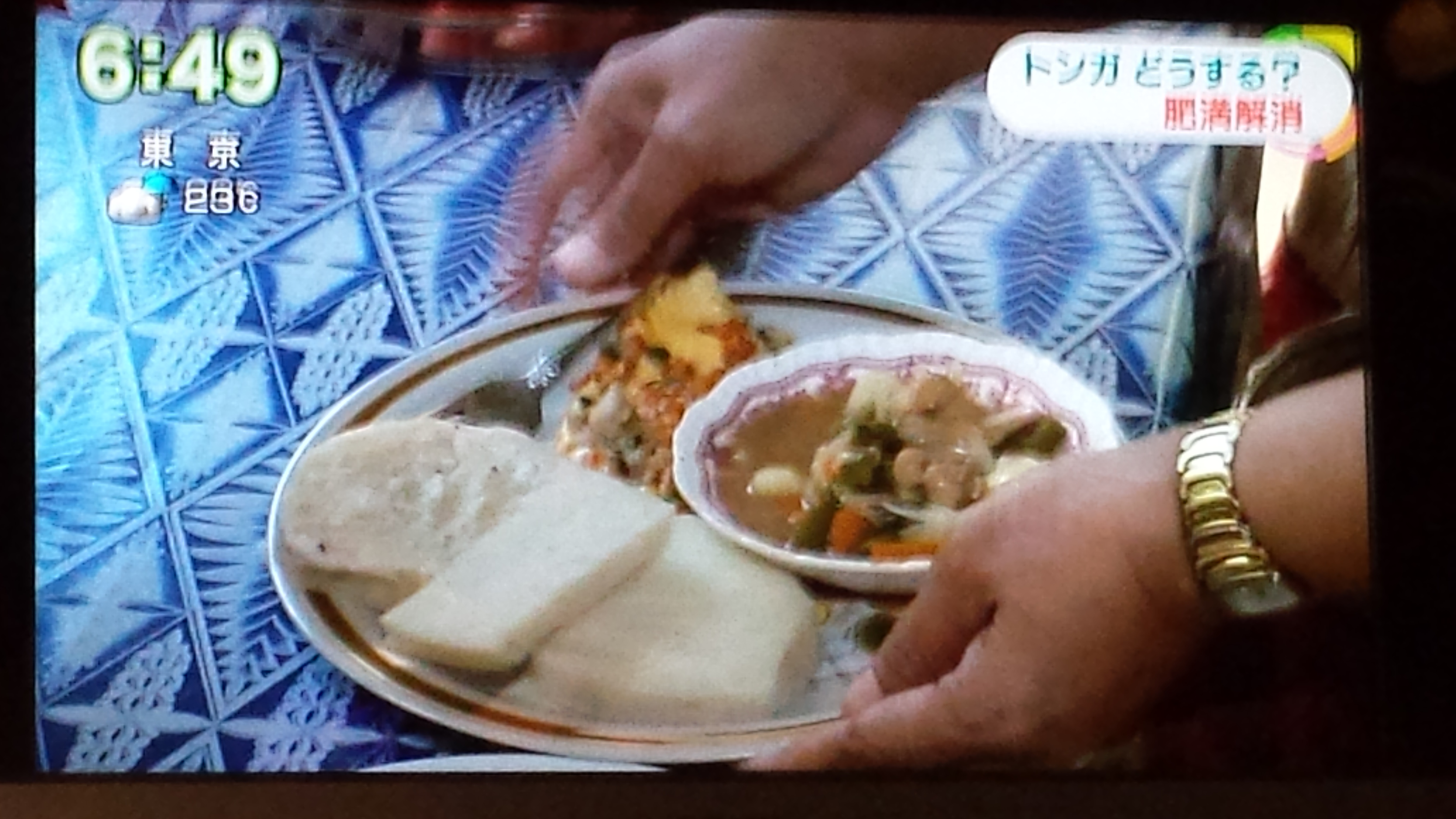
I’m traveling in Japan and wanted to take advantage of my WordPress site and document my travel. Here now an essay on how I love NHK Morning shows. They do more international stories than their US counterparts. There was a short segment on India (I think as I’m not Japanese proficient). But I feel I can sometimes figure out the gist of these stories. When I don’t know exactly the story I fill in the details in my head. (screenshot below, note we were up early today)
Netlist and the Present
Netlist are the owners of the patent on key parts of Sandisk’s UtraDIMM technology (licensed from Diablo Technologies originally, I believe). While Netlist has lawsuits going back and forth regarding its intellectual property, it continued to develop products. Here now is the EXPRESSvaultTM EV3 announcement. It’s a PCI RAM disk of sorts that backs up the RAM with a ultracapacitor/battery combo. If power is lost an automated process backs up the RAM to onboard flash memory for safe keeping until power is restored. This design is intended to get around the disadvantages of using Flash memory as a disk and the wear and tear that occurs to flash when it is written to frequently. Less expensive flash memory suffers more degradation the more you write to it, eventually memory cells will fail altogether. By using the backing flash memory as failsafe, you will write to that flash only in the event of an emergency, thereby keeping the flash out of the grindstone of high levels of I/O. Note this is a very specific niche application of this technology but is very much the market for which Netlist has produced products in the past. This is their target market.
The Future is lower latencies-Enter UltraDIMM
Turn now to a recent announcement by Lenovo and it’s X6 server line announcing further adoption of the UltraDIMM technology. Lenovo at least is carrying on trying to sell this technology of Flash based memory interspersed with DRAMs. The idea of having “tiers” of storage with SSDs, UltraDIMMs and DRAM all acting in concert is the high speed future for the data center architect. Lucky for the people purchasing these things Netlist and Diablo’s legal wrangling began to sort itself out this Spring 2015: http://www.storagereview.com/diablo_technologies_gains_ground_against_netlist_in_ulltradimm_lawsuit
With a final decision being made fairly recently: http://www.diablo-technologies.com/federal-court-completely-dissolves-injunction/Now Diablo and Sandisk and UltraDIMM can compete in the marketplace once more. And provide a competitive advantage to the people willing to spend the money for the UltraDIMM product. By itself UltraDIMM does make for some very interesting future uses. More broadly the adoption of an UltraDIMM like technology in laptops, desktops, tablets could see speed improvements across the board. Whether that happens or not is based more on the economics of BIOS and motherboard manufacturers than the merit of the design engineering of UltraDIMMs. More specifically Lenovo and IBM before that had to do a lot of work on the X6 servers to support the new memory technology. Which points to another article from the person I trust to collect all the news and information on storage worldwide, The Register’s Chris Mellor. I’ve followed his writing since about 2005 and really enjoyed his take on the burgeoning SSD market as new products were announced with faster I/O every month in the heady days of 2007 and beyond. Things have slowed down a bit now and PCIe SSDs are still the reference standard by which I/O benchmarks are measured. Fusion-io is now owned by Sandisk and everyone’s still enjoying the speed increases they get when buying these high end PCIe products. But it’s important to note for further increases to occur, just like with Sandisk’s use of UltraDIMM you have to keep pushing the boundaries. And that’s where Chris’s most recent article comes in.
Memory Meshes, Present and Future
http://www.theregister.co.uk/2015/05/08/taming_the_flash_card_cowboys/?page=2
Chris discusses the how Non-Volatile Memory Host Controller Interface (NVMHCI) came about as a result of legacy carry-over from spinning hard drives in the AHCI (Advanced Host Controller Interface) standard developed by Intel. AHCI and SATA (Serial ATA, the follow-on to ATA) both assumed spinning magnetic hard drives (and the speeds at which they push I/O) would be the technology used by a CPU to interact with it’s largest data store, the hard drive. Once that data store became flash memory, a new standard to drive faster access I/O and lower latencies needed to be invented. Enter the NVMe (Non-volatile Memory Express) interface, now being marketed and sold by some manufacturers. A native data channel from the PCI bus to your SSD however it may be designed, is the next big thing in hardware for SSDs. With the promise of better speeds it is worth migrating, once the manufacturers get onboard. But Chris’s article goes further to really look out beyond the immediate concerns of migrating from SATA to NVMe as even Flash memory may eventually be usurped by a different as yet unheard of technology. Given that’s the case, NVMe abstracts enough of the “media” of the non-volatile memory that it should allow future adoption of a number of possible technologies that could usurp the crown of NAND memory chips. And that potentially is a greater benefit than simply just squeezing out a few more Megabytes per second read and write speed. Even more tantalizing in Chris’s view is the mixing of DRAM and Flash memories in a “mesh” lets say of higher and lower speed memories like Fusion-io’s software uses to make the sharp distinction between DRAM and Flash less visible. In a sense, the speed would just come with the purchase of the technology, how it actually works would be the proverbial magic to the sysadmins and residents of Userland.

The ever-increasing density of virtual infrastructures, and the need to scale databases larger than ever, is creating an ongoing need for faster storage. And while flash has become the “go to” performance option, there are environments that still need more. Nonvolatile DRAM is the heir apparent, but it often requires customized motherboards to implement, for which widespread availability could be years away. Netlist, pioneer of NVRAM, has introduced a product that is viable for most data centers right now: the EXPRESSvaultTM EV3.
While flash has solved many performance problems, it also creates a few. First there is a legitimate concern over flash wear, especially if the environment is write-heavy. There is also a concern about performance. While flash is fast compared to hard disk drives it’s slow when compared to RAM, especially, again, on writes.
But flash does have two compelling advantages over DRAM. First it is…
View original post 394 more words
In Rochester NY, they would serve it open faced and call it a “Garbage Plate”.
Full credit goes to Mark Guzdial and his blog: Computing Education
An interesting article by Amy Bruckman about both being a good software customer (knowing how software is developed and maintained). The reverse side of this is teaching professional ethics to the developer/web-designer/programmer selling their services to people. It seems still there’s very much a Wild West, frontier days attitude similar to year 2000, Internet Bubble era. Once both sides of the transaction are fully educated, much better outcomes will occur I believe.

My colleague, Amy Bruckman, wrote a blog post about the challenges that nonprofits face when trying to develop and maintain software. She concludes with an interesting argument for computing education that has nothing to do with learning programming that everyone needs. I think it relates to my question: What is the productivity cost of not understanding computing? (See post here.)
This is not a new phenomenon. Cliff Lampe found the same thing in a study of three nonprofits. At the root of the problem is two shortcomings in education. So that more small businesses and nonprofits don’t keep making this mistake, we need education about the software development process as part of the standard high-school curriculum. There is no part of the working world that is not touched by software, and people need to know how it is created and maintained. Even if they have no intention of becoming…
View original post 108 more words
 Carpet Bomberz Inc.