It’s not often that you see something that makes you think “this is a game changer.” The introduction of logic synthesis circa 1990 was one such event; today’s introduction of SDNet from Xilinx may well be another.
Cisco has used different RISC chips over the years as its network processors. Both in it’s network closet switches and the core router chassis. First generation was based on the venerable MIPS processor, then subsequently they migrated to PowerPC, both for power reduced processing but also network optimized cpus. Cisco’s engineers would accommodate changes in function by releasing new version of the IOS. Or they would release new line cards for the big multi-slot router chassis. Between software and hardware releases they would cover the whole spectrum of wired, wireless, optical networking. It was a rich mix of what could be done.
Enter now the possibility of not just Software Defined Networking (kind of like using Virtual Machines instead of physical switches), but software defined firmware/hardware. FPGAs (field programmable gate arrays) are the computing world’s reconfigurable processor. So instead of provisioning a fixed network processor, and virtualizing on top of that to gain the software defined network, what if you could work the problem from both ends? Reconfigure the software AND the network processor. That’s what Xilinx is proposing with this announcement of SDNet. The prime example given in this announcement is the line card that would slot into a a large router chassis (some Cisco gear comes with 13 slots). If you had just a bunch of ports, let’s say RJ-45 facing outward, what then happens on the inside via the software/hardware reconfigurability would astound you. You want Fibre Channel over Ethernet? You want 10Gbit? You want SIP traffic only? You don’t buy a line card per application because it’s set in stone what the function is. You tell the SDNet compiler these are the inputs, these are the outputs, please optimize the functions and reconfigure the firmware as needed.
Once programmed, that line card does what you tell it to do. It can inspect packets, it could act as a firewall, it could prioritize traffic, shape bandwidth or just simple route things as fast as it could possibly go. Doesn’t matter what signals are running over what pins, as long as it knows it’s RJ-45 connectors, it will do the rest. Amazing when you think about it that way.
Thali sounds like an amazing non-cloud centric enabling technology. And would be well worth the price of admission to use it. I cannot tell you how many times I remind friends when they complain about Facebook, that they are the product not Facebook. Thali makes each person their data center cloud with full rights to grant access to which ever fragment/shard of that existing “mesh” that you wish to any other individual person. Big Brother is only going to watch the data go through the series of tubes. He will not get notices or National Securities Letters from the FBI asking for all the data in your account as all the data is where it originated on YOUR devices, in YOUR possession. I think I’m getting the hang of this now and I find it very appealing. Can’t wait to learn more about Thali.
When Groove launched somebody asked me to explain why it was an important example of peer-to-peer technology. I said that was the wrong question. What mattered was that Groove empowered people to communicate directly and securely, form ad-hoc networks with trusted family, friends, and associates, and exchange data freely within those networks. P2P, although then much in vogue — there were P2P books, P2P conferences — wasn’t Groove’s calling card, it was a means to an end.
The same holds true for Thali. Yes it’s a P2P system. But no that isn’t the point. Thali puts you in control of communication that happens within networks of trust. That’s what matters. Peer networking is just one of several enablers.
Imagine a different kind of Facebook, one where you are a customer rather than a product. You buy social networking applications, they’re not free. But when you use those apps…
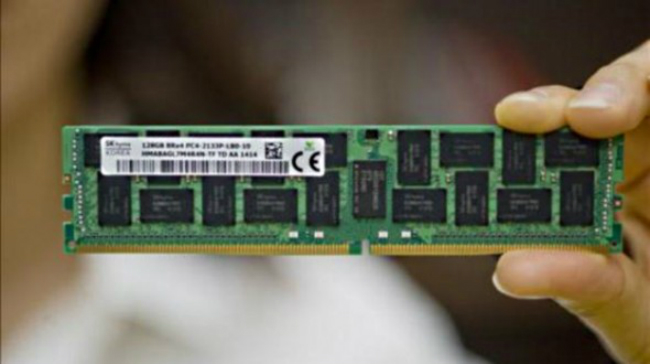
Where you’re going to see the biggest benefits to DDR4 is in the mobile/portable device category. On the desktop there might be a slight increase in speed, but not like the big bumps of previous generations of DDR architectural moves. So figure on 10% maybe depending on the chipset and CPU and the 3rd level cache on the cpu die. That combo is more likely to affect your overall system speed than just moving to DDR4 DIMMs on the motherboard.
SK Hynix?s high-capacity DDR4 modules are based on Through Silicon Via (TSV) technology.
DDR4 capable motherboards and CPUs aren’t yet on the market, but that hasn’t stopped SK Hynix from putting some serious work into making high capacity DDR4 modules. On Tuesday the South Korean sem…
Qualcomm finally unveils its high-end 64-bit enabled SoCs, but they won?t be available until the first half of 2015.
Qualcomm has launched its first batch of ARM v8-based SoCs last month, but this time around it is detailing its plans for the high-end segment. The Snapdragon 810 and …
It’s an accepted fact that a VDI environment can create some challenges for the IT infrastructure. Mashing hundreds of desktop workloads onto a disk array that was designed for more general-purpose applications can lead to poor or inconsistent performance. This can lead to another challenge, meeting user expectations.
To attend the webinar, please click below:
Performance and Expectations
When a VDI project is undertaken, it’s assumed that the user ‘experience’, how responsive their desktop applications are, will be the same or better than with the legacy infrastructure. Unfortunately, this isn’t always the case, based in the storage challenges that often accompany a VDI project. Making things worse, many users are getting spoiled by the performance of flash in tablets and flash boot drives in laptops.
This combination of demanding storage requirements and heightened user expectations has driven many companies to conclude that their VDI project must be supported by a…
RotoMAAK: Rotocasting Done Right | EE Times. After the printing press was invented, there was a long lag in between when Photocopying was invented. It’s time to do the same for 3D printing. Don’t print all originals, duplicate them instead with a Rotocaster like the RotoMAAK. Make sense doesn’t it? Especially considering the cost of materials. Why just today the Guiness Book of World records is attempting to measure a feat of 3D printing using 50 printers running parallel. Wouldn’t it be just as efficient to create one single model and cast the 50 copies in a shorter period of time? But consider this, Lulzbot a contract manufacturer has that many and more that CAN print the same object simultaneously: http://www.youtube.com/watch?v=v_jUObUGLTA 109 Lulzbots all working printing the same exact item, printing all originals from the same 3D design file. Still this seems wasteful to me given the amount of material used in each one. Knowing there’s a potentially faster, cheaper alternative like photocopying when Xerox hit the big time in the early 1960s, now THAT to me is the killer app. 3D Printing or CNC milling operations are stupendous at making the one off, the original the bespoke item you need. But for multiples? Just seems like a unproductive time sync that other existing industrial processes could be used to help speed up and make less expensive. So if given the choice between casting versus printing multiple originals, just try costing out short runs of cast items. You might surprise yourself and get it faster, cheaper and higher quality in the end.
Wow this has gotten my brain to working overtime. How small can you go with System on Chip like fully integrated Raspberry Pi modules? Could you fit this not just on an SO-DIMM but also maybe an SDXC sized memory card? Or a Micro-SDXC card? Imagine that. And if you want to see an even better write-up of this announcement, go over to Make magazines online website here:
They’ve got Vimeo video and other great analysis looking at this system on an SO-DIMM board. Very interesting stuff.
Lithium ion battery by Varta (Museum Autovision Altlußheim, Germany) (Photo credit: Wikipedia)
A pair of battery vendors are hoping that a new design which incorporates the use of an ultracapacitor material will help to improve and extend the life of lithium-ion battery packs.
First a little background info on what is a capacitor: https://en.wikipedia.org/wiki/Ultracapacitor#History
In short it’s like a very powerful, high density battery for smoothing out the “load” of an electrical circuit. It helps prevent spikes and dips in the electricity as it flows through a device. But with recent work done on ultra-capacitors they can be more like a full-fledged battery that doesn’t ever lose it’s charge over time. When they are combined up with a real live battery you can do some pretty interesting things to both the capacitor and the battery to help them work together, allowing longer battery life, higher total amount of charge capacity. Many things can flow from combining ultracapacitors with a really high end Lithium ion battery.
Any technology, tweak or improvement that promises at minimum 10% improvement over current Lithium ion battery designs is worth a look. They’re claiming a full 15% in this story from The Reg. And due to the re-design it would seem it needs to meet regulatory/safety approval as well. Having seen the JAL Airlines suffer battery issues on the Boeing 787, I couldn’t agree more.
There will be some heavy lifting needing to be done between now and when a product like this hits the market. Testing and failure analysis will ultimately decide whether or not this ultra-capacitor/Lithium ion hybrid is safe enough to use for consumer electronics. I’m also hoping Apple and other manufacturer/design outfits like Apple are putting some eyes, ears and phone calls on this to learn more. Samsung too might be interested in this, but are seemingly more reliant for battery designs outside of their company. That’s where Apple has the upperhand long term, they will design every part if needed in order to keep ahead of the competition.
Just a sample of what’s yet to come when Oculus Rift eventually hits the market. Jaunt is developing the hardware/software required to shoot cinematic 3D movies. It is in prototype now. And it is very early days still even with the Oculus Rift VR head set. But now is the time for companies like Jaunt to stake their claim, and start up before the VR land rush occurs.
A children’s choir is circled around me, singing. Individual voices become clear and then fade away again as I turn from side to side, listening as the notes mix and blend together before disappearing into the vaulted ceiling above our heads.
The choir fades to black, reminding me of where I really am: a dark room in Palo Alto with a set of Oculus Rift goggles strapped to my head. What I just watched is akin to the most advanced home movie ever filmed. The children were not actually singing to me, but to a ball-like camera that films video and audio in 360 degrees.
Jaunt, a Palo Alto startup that revealed itself today with news of $6.8 million in venture funding, intends to use its unique camera to prove that virtual reality is not just for gaming. The company is developing an assortment of software and hardware that will allow Hollywood — and potentially anyone — to…







 Carpet Bomberz Inc.