
It’s important to know the full implications of Facebook buying Oculus. Let’s first start with the history lesson,… how did we get here?
Category: technology
General technology, not anything in particular
-
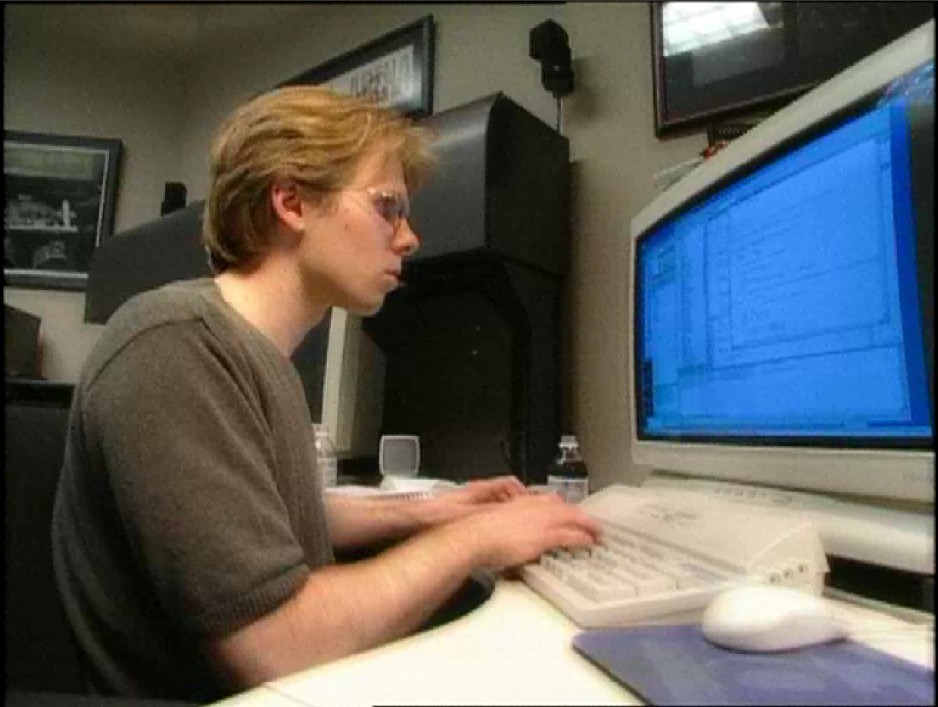
The Creator Of “Doom” Is Now A Facebook Employee
It’s true, John Carmack did take up residence at Oculus. Makes me wonder how long he is for the new mashup. I would like to think Facebook will treat it like an independent subsidiary able to chart its own course. That would be best for everyone.
-
Financial Firms Looking To Linux, Windows 7 As XP Support Dries Up
I think the same was true in the era prior to WinXP (2001), when IBM’s OS/2 was the only game in town for the ATMs. They migrated once, they can do it again.
-
The next thing
Not to worry, the idea is good, the logic sound. It’s just people being focused on immediate, pragmatic needs and not looking further. Bigger picture may eventually be important to calendar owners when competitors gain advantage and added value by having their calendars be aggregated easily through RSS subscription. When they guy next door starts getting all the traffic, they’ll see the value.
The Elm City project was my passion and my job for quite some time. It’s still my passion but no longer my job. The model for calendar syndication that I created is working well in a few places, but hasn’t been adopted widely enough to warrant ongoing sponsorship by my employer, Microsoft. And I’ll be the last person to complain about that. A free community information service based on open standards, open source software, and open data? Really? That’s your job? For longer than anyone could reasonably have expected, it was.
So now I’m on to the next project, one that you might think even more unlikely for a Microsoft employee. I’m helping Yaron Goland create something we are both passionate about: the peer-to-peer Web. Yaron’s project is called Thali, and I’ll say more about it later.
But first I want to sum up what I’ve learned from the…
View original post 339 more words
-
UW Researchers Create World’s Thinnest LED | EE Times

Boron nitride (Photo credit: Wikipedia) The researchers harvested single sheets of tungsten selenide (WSe2) using adhesive tape, a technique invented for the production of graphene. They used a support and dielectric layer of boron nitride on a base of silicon dioxide on silicon, to come up with the thinnest possible LED.
Wow, it seems like the current research in graphene has spawned at least one other possible application, using adhesive tape to create thin layers of homogeneous materials. This time it’s a liquid crystal material with possible applications in thin/flexible LCD displays. As the article says until now Organic LED (OLED) has been the material of choice for thin and even flexible displays. It’s also reassuring MIT was able to publish some similar work in the same edition of Nature magazine. Hopefully this will spur some other researchers to put some money and people on pushing this further.
With all early announcements like this in a fully vetted, edited science journal, we won’t see the products derived from this new technology very soon. However, hope spring eternal for me, and I know just like with OLED, eventually if this can be further researched and it’s found to be superior in cost/performance, it will compete in the market place. I will say the steps in fabrication the researchers used are pretty novel and show some amount of creativity to quickly produce a workable thin film without inordinately expensive fabrication equipment. I thinking about specifically the epitaxial electron beam devices folks have used for nano-material research. Like a 3D printer for atoms these devices are a must-have for many electronics engineering and materials researchers. And they are notoriously slow (just like 3D printers) and expensive for each finished job (also similar to 3D printers). The graphene approach to manufacturing devices for research started with making strands of graphite filaments by firing a laser at a highly purified block of carbon, until after so many shots, eventually you might get a shard of a graphene sheet showing up. Using adhesive tape to “shear” a very pure layer of graphite into a graphene sheet, that was the lightning bolt. Simple adhesive tape could get a sufficiently homogeneous and workable layer of graphene to do real work. I feel like there’s a similar approach or affinity at work here for the researchers who used the same technique to make their tungsten selenide thin films for their thin LED displays.

English: Adhesive tape (Photo credit: Wikipedia) Related articles

-
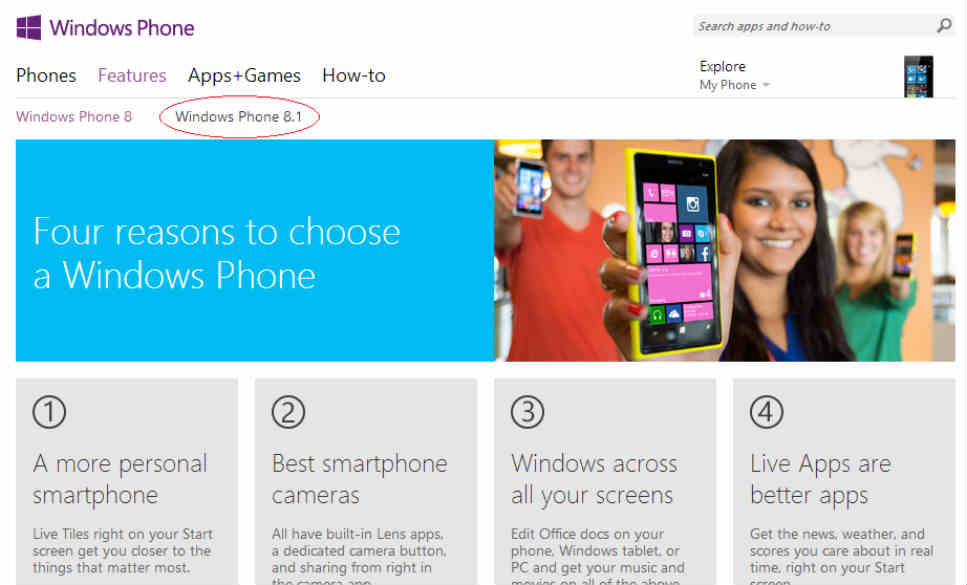
Windows Phone 8.1 shows up on Microsoft’s website, Windows 8.1 Update goes live early

Microsoft?s upcoming updates for both the desktop and phone versions of Windows 8 popped up prematurely on the company?s website.
Microsoft is expected to announce Windows Phone 8.1 and Windows 8.1 Update (earlier known as Update 1) in early April, but both have managed to make an …
-

Layar brings augmented reality and a QR code scanner to Google Glass
Layar resurfaces with a new app and somewhat greater cred. I feel somewhat greater cred due to choice of platform. Google Glass is the right platform for real Augmented Reality (AR) and much better suited for continuous use. I remember all the demos of smartphones with Layar, and not to say it was underwhelming, but it was all floating “balloons” you needed to tap to see the embedded text. It wasn’t quite the Terminator like interface with full info overlays, but fields of candy colored bubbles begging you to ‘click here’ to “see more”.
Google(s goog) Glass got an unofficial augmented reality app on Thursday as Layar introduced its immersive platform to the wearable device. The beta software has to be downloaded directly from Layar’s website and installed manually to Glass. Once that’s done, however, you can simply say “OK Glass, scan this” to see information from print magazines, local real estate or even movie trailers.

I’ve already installed the software on Glass and it works as advertised if you can find supported content. The app ties into Layar’s augmented reality platform, which is currently used for interactive ads and geo-layers when out and about. Since I’m in the home office, I tried scanning some ads from my latest issue of Runner’s World but it appears that magazine doesn’t have a partnership with Layar.
I did have success by looking at a movie poster for The Hobbit on my laptop’s display: Layar correctly…
View original post 105 more words
-
AnandTech | Testing SATA Express And Why We Need Faster SSDs

PCIe- und PCI-Slots im Vergleich (Photo credit: Wikipedia) Even a PCIe 2.0 x2 link offers about a 40% increase in maximum throughput over SATA 6Gbps. Like most interfaces, PCIe 2.0 isn’t 100% efficient and based on our internal tests the bandwidth efficiency is around 78-79%, so in the real world you should expect to get ~780MB/s out of a PCIe 2.0 x2 link, but remember that SATA 6Gbps isn’t 100% either (around 515MB/s is the typical maximum we see). The currently available PCIe SSD controller designs are all 2.0 based but we should start to see some PCIe 3.0 drives next year. We don’t have efficiency numbers for 3.0 yet but I would expect to see nearly twice the bandwidth of 2.0, making +1GB/s a norm.
via AnandTech | Testing SATA Express And Why We Need Faster SSDs.
As I’ve watched the SSD market slowly grow and bloom it does seem as though the rate at which big changes occur has slowed. The SATA controllers on the drives themselves were kicked up a notch as the transition from SATA-1 to SATA-2 gave us consistent 500MB/sec read/write speeds. And that has stayed stable forever due to the inherent limit of SATA-2. I had been watching very closely developments in PCIe based SSDs but the prices were always artificially high due to the market for these devices being data centers. Proof positive of this is Fusion-io catered mostly to two big purchasers of their product, Facebook and Apple. Subsequently their prices always put them in the enterprise level $15K for one PCIe slot device (at any size/density of storage).
Apple has come to the rescue in every sense of the word by adopting PCIe SSDs as the base level SSD for their portable computers. Starting last Summer 2013 Apple started released Mac Book Pro laptops with PCIe SSDs and then eventually started designing them into the Mac Book Air as well. The last step was to fully adopt it in their desktop Mac Pro (which has been slow to hit the market). The performance of the PCIe SSD in the Mac Pro as compared to any other shipping computer is the highest for a consumer level product. As the Mac gains some market share for all computers being shipped, Mac buyers are gaining more speed from their SSD as well.
So what further plans are in the works for the REST of the industry? Well SATA-express seems to be a way forward for the 90% of the market still buying Windows PCs. And it’s a new standard being put forth by the SATA-IO standards committee. With any luck the enthusiast market motherboard manufacturers will adopt it as fast as it passes the committees, and we’ll see an Anandtech or Tom’s Hardware guide review doing a real benchmark and analysis of how well it matches up against the previous generation hardware.
Related articles
-

Microsoft Office for iPad to be unveiled on March 27
I know there’s a lot of anti-Microsoft sentiment in the Apple/Mac community. But for mobile device owners (ipod touch, iPhone, iPad, etc.) having this might mean giving up a laptop or desktop depending on their needs. Office for iPad could become the killer app for the larger screened tablets.

Microsoft Office for iPad will feature similar functionality as Office for the iPhone, with users requiring an Office 365 account for document creation.
Satya Nadella is holding an event for the press on March 27 in San Francisco in which he is slated to discuss the details of Microsoft’s “m…
Read more: http://vr-zone.com/articles/microsoft-office-ipad-unveiled-march-27/74313.html






 Carpet Bomberz Inc.